
 By
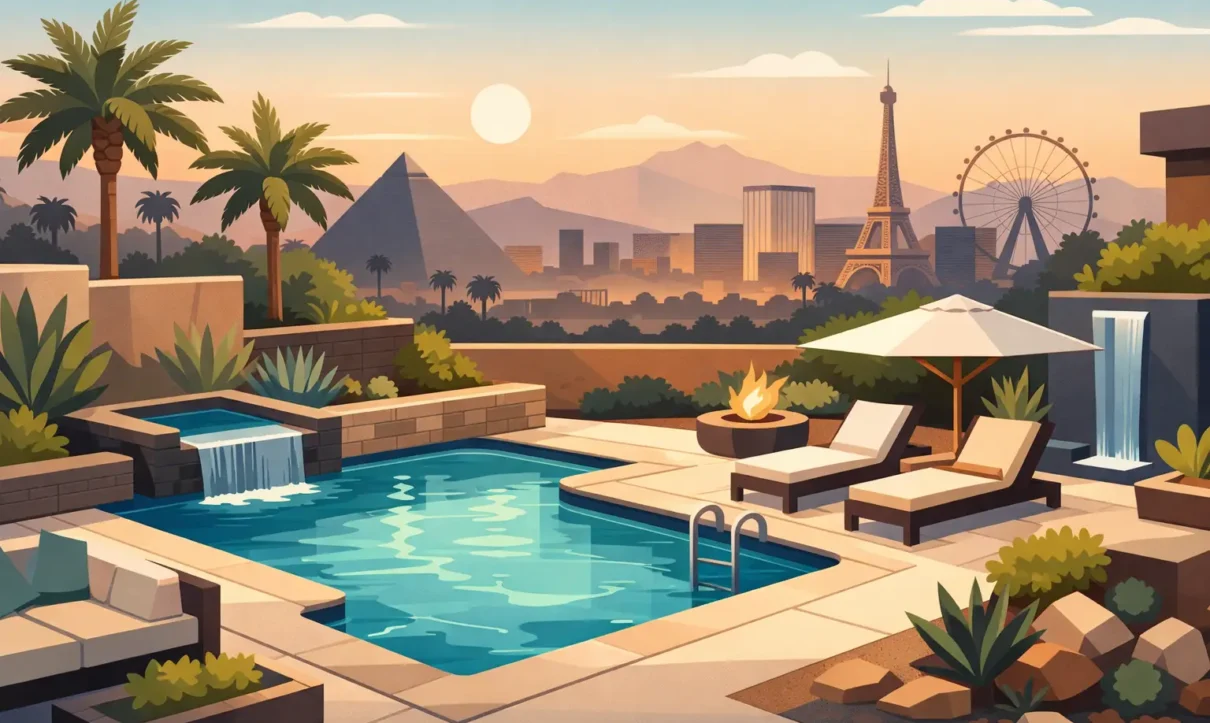
By A small backyard should not force a homeowner to settle for a small vision. The most successful compact pool transformations use every square foot with purpose, turning a dated, cramped, or underused yard into a place for cooling off, entertaining, relaxing, and enjoying the Las Vegas climate. The answer is rarely just making the pool smaller. It is designing the entire outdoor environment to work together.
For some homeowners, that means renovating an aging pool with cleaner lines, upgraded finishes, and modern equipment. For others, it means building a new custom pool that creates a resort-style experience without overwhelming the property. With thoughtful planning, a compact yard can hold far more than a body of water. It can become a complete outdoor retreat.
What Compact Pool Transformations Can Solve
Limited space creates design decisions, but it does not eliminate possibilities. A narrow side yard, shallow lot, or backyard shared with an existing patio can still support a highly functional pool environment. The key is to identify what the space needs to do first.
A family that wants an easy place to cool down may prioritize a shallow tanning ledge, broad entry steps, and durable deck space. Homeowners who entertain may prefer a compact pool paired with a raised spa, fire feature, outdoor kitchen, or shaded seating area. Someone renovating an older pool may simply want to remove bulky features, update tile and coping, and create a more open visual connection between the house and water.
Compact designs can also solve a common issue in older Las Vegas backyards: a pool may occupy the center of the yard without supporting the way the homeowners actually live. A renovation can reshape the layout, improve circulation around the pool, and give patios, landscaping, lighting, and gathering spaces a defined role.
Start With a Pool That Fits the Property
A compact pool should be designed around the yard rather than pulled from a standard template. Property lines, utility locations, access routes, drainage, sun exposure, and local setback requirements all affect what can be built. The position of the home matters, too. A pool that looks attractive on paper may feel disconnected if it is placed too far from the main patio, kitchen, or indoor gathering areas.
In a smaller setting, geometry has an outsized effect. Straight-edged pools often work well in contemporary yards because they can align with a patio, retaining wall, or property boundary. Freeform shapes can soften a space and create a more natural look, although their curves need to be carefully planned so they do not consume valuable deck area.
Depth deserves the same attention. A deep pool may appeal to homeowners who want to dive or play more actively, but a shallower design can be more usable for lounging, socializing, and everyday family enjoyment. It may also allow for larger steps, a wet deck, or a tanning shelf without making the pool feel crowded. There is no universal right answer. The best depth profile depends on how the pool will be used most often.
Give One Feature More Than One Job
The strongest small-space designs rely on features that serve multiple purposes. A raised spa can provide year-round relaxation, visual elevation, and the sound of a cascading spillway. A tanning ledge can be a place for lounge chairs, a shallow play zone for younger children, and a convenient area to sit in the water during a summer gathering.
Wide entry steps can function as a social perch rather than simply an access point. A perimeter-overflow detail or tile accent can introduce a custom finish without requiring an oversized water feature. Even a modest sheer descent can add movement and sound while remaining appropriately scaled to the yard.
This approach helps the pool feel more complete without filling the yard with separate elements competing for space. It also supports a more intentional investment. Instead of adding features because they are popular, homeowners can choose details that improve comfort, use, and visual impact.
Keep the Deck and Shade in the Design Conversation
A pool alone does not make a backyard livable. In Las Vegas, comfortable deck space and shade are essential parts of the plan. Compact pool transformations often succeed because the hardscape is redesigned as carefully as the water itself.
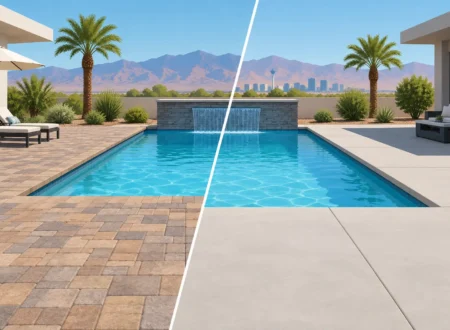
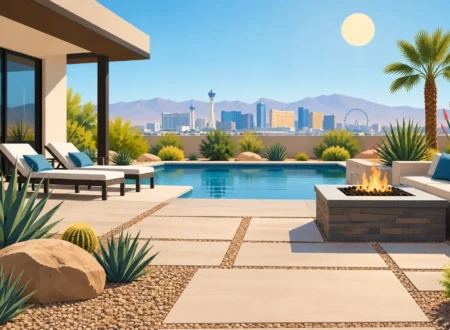
The goal is not necessarily to create the largest deck possible. It is to create the right deck zones. A clear path from the house to the pool, room for a pair of lounge chairs, and a comfortable seating area may be more valuable than a large but undefined expanse of concrete. Thoughtfully selected pavers, textured decking, or decorative concrete can help visually connect the pool to the home while providing a durable surface underfoot.
Shade planning should happen early, especially on properties with strong afternoon exposure. A patio cover, pergola, architectural shade structure, or well-positioned umbrella zone can make the space more usable through the hottest months. The trade-off is that a shade structure must be sized and located carefully. Too much overhead coverage can block an open view of the pool or make a compact yard feel enclosed. The right balance protects comfort while preserving a sense of openness.
Use Water, Fire, and Landscape With Restraint
Small yards can support premium features, but scale matters. A large fire pit, oversized waterfall, or dense planting plan can make a compact pool area feel busy rather than refined. The better approach is to select a few focal points and build the design around them.
A fire bowl at the edge of the pool, a linear fire feature along a wall, or a raised spa with a spillway can create a high-end atmosphere without taking over the space. Landscape lighting can define pathways, highlight architectural planting, and make the pool area inviting after sunset. Low-water plantings and carefully placed specimen plants can soften hardscape while fitting the realities of the desert climate.
Water features should be considered from both visual and practical perspectives. The sound of falling water can create privacy and a relaxing atmosphere, but it should suit the home and the surrounding neighborhood. Equipment selection, automation, and water management also deserve consideration. Modern pool systems can simplify daily operation, allowing homeowners to control lighting, heating, pumps, and features with greater convenience.
Renovating a Small Existing Pool
An existing pool renovation can produce one of the most dramatic transformations in a compact yard. Removing worn plaster, faded waterline tile, outdated coping, or uneven deck surfaces immediately changes the appearance of the space. More extensive remodeling can alter the pool shape, add a spa, install a Baja shelf, improve steps, or update the equipment for better efficiency and control.
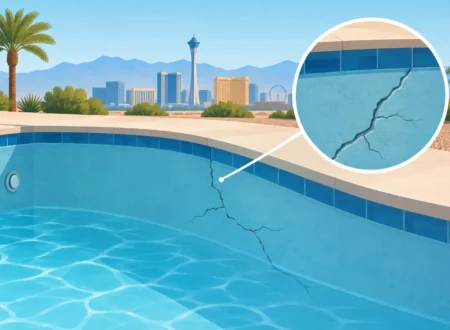
It is also an opportunity to correct issues that may not be visible at first glance. Aging plumbing, poor drainage, deteriorating surfaces, and outdated electrical components can affect long-term performance. Addressing these elements during a renovation helps protect the value of the finished project.
Before deciding whether to remodel or replace, homeowners should consider the existing shell, desired changes, budget, and construction access. A cosmetic renovation may be the right move when the pool structure and layout still work. A more comprehensive transformation makes sense when the yard needs a new function, the pool has significant limitations, or the surrounding hardscape no longer supports the homeowner’s lifestyle.
Why 3D Design Matters in a Small Backyard
In a large property, minor layout adjustments may be easy to absorb. In a compact yard, a few feet can change everything. Professional 3D design helps homeowners see how the pool, spa, decking, patio cover, landscaping, and features will relate before construction begins.
This visual planning makes it easier to evaluate sightlines from inside the home, confirm that furniture zones will feel comfortable, and decide where a fire feature or outdoor kitchen belongs. It can also reveal when a preferred feature is too large for the plan or when a different configuration creates better flow.
For more than 30 years in the Las Vegas Valley, Laguna Pool and Spa has approached backyard projects as integrated environments, not isolated pool installations. That design-led perspective is especially valuable for compact spaces, where every material, feature, and pathway must earn its place.
Build for the Way You Will Actually Live
The most rewarding compact pool transformations are not defined by how many amenities fit into the yard. They are defined by how naturally the space supports everyday life. A smaller pool can feel generous when it is easy to reach, comfortable to use, attractive from the home, and supported by shade, seating, lighting, and durable finishes.
Start with the moments you want the backyard to create: quiet evenings in the spa, weekend time with family, poolside dinners, or a refreshing escape from the summer heat. A free design consultation can turn those priorities into a clear, buildable plan that makes even a limited Las Vegas backyard feel considered, personal, and complete.


1 Comment
Comments are closed.