 By
By A Las Vegas pool can work hard long after the family comes inside. Pumps need to run, water chemistry needs attention, and temperatures can shift quickly between a hot afternoon and a cool desert evening. Pool automation brings those daily functions into one intelligent control system, so the backyard is ready when you are – without requiring constant trips to the equipment pad.
For homeowners building a new pool or updating an older one, automation is not simply a convenience feature. It is a practical way to manage energy use, protect equipment, improve safety, and make a pool, spa, lighting, and water features feel like one complete outdoor environment.
What Pool Automation Controls
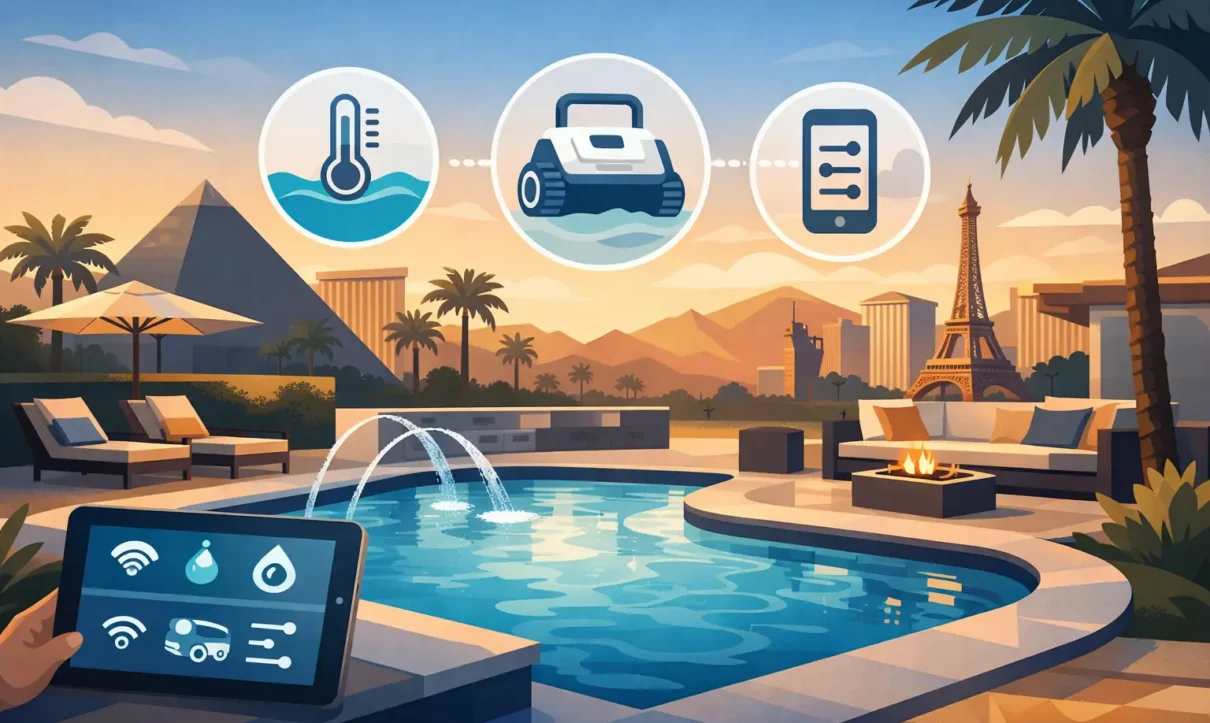
A pool automation system connects compatible equipment to a central controller. Depending on the design, that controller may be accessed from a wall-mounted panel, a handheld remote, or a phone and tablet app. Instead of operating each component separately, homeowners can establish schedules, make adjustments remotely, and activate several features with one command.
The core system usually manages the circulation pump, filtration schedule, pool and spa heating, and lighting. More advanced installations can also control a salt chlorinator, water level equipment, in-floor cleaning systems, landscape lighting, fire features, and select outdoor-living elements.
The right scope depends on how the backyard will be used. A straightforward family pool may only need programmable filtration, heating, and lights. A larger custom retreat with a spa, deck jets, cascading spillway, fire bowls, and outdoor kitchen benefits from a more comprehensive design. The goal is not to automate every possible feature. It is to make the features you use most feel effortless.
Pool and Spa Mode Without the Equipment-Pad Routine
For a pool-and-spa combination, one of the most valuable functions is switching between pool mode and spa mode. The system can move motorized valves into the correct position, direct water to the spa, start the heater, and activate jets. When the evening ends, it can return to normal pool circulation.
That sequence matters because the equipment must operate in the right order. Manual valves and switches can certainly do the job, but they require a homeowner to understand the plumbing layout and remember each step. Automation reduces that friction, which makes a spa more likely to be used on a regular basis.
Why Automation Makes Sense in Las Vegas
Our climate puts a premium on thoughtful pool operation. During the summer, a pool may be used daily, while intense heat and wind can increase evaporation and affect water balance. Cooler months bring a different routine, particularly for homeowners who want to heat a spa on demand rather than keep it at temperature all day.
Automation gives owners control over these changing conditions. A variable-speed pump can be scheduled to operate at lower speeds for routine circulation and higher speeds only when a water feature, cleaner, or spa jets require more flow. Because pumps are among the largest energy users in a pool system, this approach can make a meaningful difference in operating costs.
It also supports more consistent care. A scheduled pump run time, chlorination setting, and heating plan creates a reliable baseline. That does not replace water testing or professional service, but it helps prevent the common problem of an equipment system being left off, run too long, or operated inefficiently.
For part-time residents and frequent travelers, remote access adds another layer of reassurance. Before arriving home, you can start the spa and lights. If a pool professional needs equipment running for a service visit, you can make the adjustment without being at the property. Some systems can provide alerts when a connected device detects a problem, though homeowners should understand exactly what their chosen system monitors before relying on notifications.
Design Automation Around How You Entertain
The best automated backyards are designed around real routines, not a list of gadgets. During the design process, consider the moments you want the space to deliver.
A family might want one button that turns on the pool lights, landscape lights, and a gentle spillway for an evening swim. Another household may want an entertaining setting that starts deck jets, illuminates a fire feature, and adjusts selected patio lighting. Spa night may call for warm water, jets, and low lighting, while a vacation setting may reduce equipment operation to an efficient maintenance schedule.
These are often called scenes or feature groups. They are especially helpful when several systems are involved. Rather than asking guests to learn individual controls, the homeowner can create a few clear settings that match the way the backyard is used.
There are limits to keep in mind. Not every fire feature, outdoor appliance, or existing landscape fixture can be integrated into every controller. Compatibility should be evaluated early, particularly during a renovation. Older equipment may require upgrades, additional relays, or separate controls. A professional plan prevents the disappointment of assuming that every element can be controlled from one app.
Choosing the Right Equipment Package
Pool automation works best when the equipment is planned as a system. A controller, variable-speed pump, heater, salt system, lighting, and actuated valves must be compatible with one another and sized for the pool’s hydraulic design. Adding automation after construction is possible, but installing the needed wiring, conduit, and control capacity during a new build is generally cleaner and more cost-effective.
For a renovation, the decision often begins with an honest assessment of the existing equipment. If a dated pump, heater, or controller is nearing the end of its service life, replacing components as a coordinated package can avoid piecemeal upgrades. On the other hand, a well-maintained pool with compatible equipment may only need a controller and a few targeted additions.
Homeowners should also ask about the practical ownership experience. Is the app easy to use? Can schedules be adjusted without calling a technician? What features remain available if internet service is interrupted? Is there a physical control panel at the equipment area? These questions matter more than a long feature list.
Automation Does Not Eliminate Maintenance
A smart controller makes pool care easier, but it cannot see every issue in the water or replace routine service. Filters still need cleaning. Water chemistry still requires testing and adjustment. Evaporation, dust, monsoon debris, and swimmer load can change conditions quickly in the Las Vegas Valley.
Think of automation as the system that keeps the pool on a disciplined operating plan. It can run equipment consistently, help manage sanitization, and give you useful control. The owner or service professional still provides the inspection and judgment that protect water quality and equipment longevity.
This distinction is particularly important with automated chemical systems. They can support a steady sanitizer level, but settings should be verified after heavy use, extreme weather, or major changes in water temperature. Convenience is valuable; oversight remains essential.
Build for Today and Leave Room for Tomorrow
A well-designed equipment pad should allow room for future improvements. You may begin with automated pump schedules and pool lighting, then later add a heater, salt system, water feature, or spa. Planning electrical capacity, plumbing routes, valve locations, and controller expansion during construction helps preserve those options.
At Laguna Pool and Spa, more than 30 years of Las Vegas Valley design-build experience informs how equipment decisions fit into the larger backyard plan. Automation should support the architecture, amenities, and lifestyle of the space, whether the project is a clean-lined modern pool, a remodeled spa retreat, or a fully integrated outdoor living environment.
Before selecting a system, walk through a typical week in your backyard. Consider when the pool runs, who uses the spa, how often you entertain, and which features you want ready at a moment’s notice. When automation is designed around those habits, the equipment disappears into the background and the backyard becomes easier to enjoy exactly as it was intended.