 By
By A Las Vegas backyard can look exceptional in spring and still fail by the end of summer if its surfaces were not selected and installed for the desert. Pool decks that hold too much heat, undersized drainage, fading finishes, and disconnected entertaining areas can limit how often a family uses the space. Thoughtful Las Vegas hardscapes solve those problems while giving a pool, landscape, and home a unified architectural presence.
Hardscape is more than the material underfoot. It is the permanent framework for outdoor living: patios, pool decks, retaining walls, walkways, outdoor kitchens, fire features, seating areas, shade structures, and the transitions that connect them. When those elements are designed as one environment, a backyard feels purposeful rather than pieced together.
Start With How the Backyard Will Be Used
The most successful hardscape plan starts with daily life, not a catalog of materials. A homeowner who hosts large weekend gatherings needs circulation around the pool, generous seating, food-prep space, and surfaces that can handle wet feet and moved furniture. A family with young children may prioritize open sightlines, slip-resistant decking, shade, and durable play areas. For a quieter retreat, the priority may be a raised spa, a fire feature, and a private lounge zone that feels removed from the main pool.
Lot size matters, but it does not determine whether a backyard can feel elevated. Smaller yards often benefit from fewer materials, cleaner lines, and built-in features that eliminate visual clutter. Larger properties can support multiple destinations, such as a poolside lounge, outdoor kitchen, fire lounge, and garden walk. In either case, the goal is to create clear zones without making the yard feel divided.
A professional design process should also account for doors, windows, views, utilities, existing grade, and the path from the house to the pool. A beautiful fire pit placed directly in a primary walkway becomes an obstacle. An outdoor kitchen without nearby shade may sit unused during much of the year. Careful planning addresses these details before crews begin excavation.
Choose Las Vegas Hardscape Materials for Comfort and Durability
Desert conditions place real demands on concrete, stone, grout, coping, and finishes. Intense sun, wide temperature swings, occasional heavy rain, irrigation overspray, and pool water all influence material performance. The right choice depends on the application, the desired style, and the maintenance level a homeowner is comfortable with.
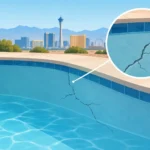
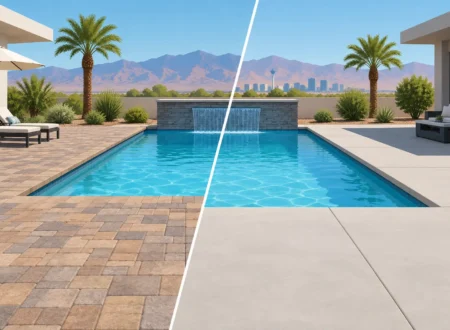
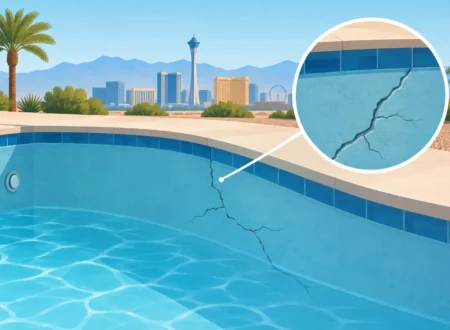
Concrete remains a versatile foundation for patios and pool decks. It can be finished in a wide range of colors and textures, shaped to fit curves or modern geometry, and used effectively across larger areas. Decorative concrete can offer a refined appearance at a practical price point, but color, texture, joint layout, and installation quality matter. A poorly planned slab can crack in distracting locations or become uncomfortably hot.
Pavers provide distinct visual patterning and can make future repairs more manageable because individual units may be replaced when needed. They work especially well for walkways, patios, and formal entertaining spaces. Their performance relies on proper base preparation, edge restraint, and drainage. Without that work below the surface, even premium pavers can shift over time.
Natural stone brings character that manufactured materials cannot fully duplicate. It can complement desert-modern, Mediterranean, and resort-style designs, particularly on coping, accent walls, steps, and fire features. Yet not every stone is equally suitable near a pool or in full sun. Some surfaces become hot, some require sealing, and some have texture profiles that are better for walls than for barefoot traffic.
Porcelain pavers and tile can create a crisp, contemporary look with consistent color and strong resistance to staining. They are often used as focal materials rather than throughout an entire yard. Their installation requires precision, and the selected product must be rated for exterior use and provide appropriate traction around water.
For pool areas, comfort and safety should guide the final selection. A pale surface generally reflects more heat than a dark one, although glare can become a consideration. Textured finishes improve traction, but an overly aggressive texture is hard on bare feet. The best material is not always the most expensive option. It is the one that supports the way the backyard will be used year after year.
Pool Decks Need More Than a Finished Surface
The pool deck is one of the most heavily used areas in an outdoor environment. It frames the water, carries foot traffic, supports chaise lounges and umbrellas, and helps control water movement after swimmers leave the pool. Its proportions influence whether the pool feels open and inviting or crowded.
Adequate deck space is especially valuable near entries, tanning ledges, spas, and areas where guests naturally gather. A narrow strip of decking might meet a minimum need, but it rarely supports relaxed entertaining. At the same time, covering every available square foot with hard surface can make a yard feel harsh and increase heat retention. Strategic landscape beds, artificial turf, shade, and planting pockets can soften the composition while preserving useful circulation.
Drainage is a construction detail homeowners should never have to think about after the project is complete. Decks should slope correctly so water moves away from the home and does not collect near the pool edge, kitchen, or seating areas. Channel drains, area drains, and carefully planned elevations may be needed depending on the property. This work is not decorative, but it protects the investment and makes the space more enjoyable after monsoon storms.
Make Outdoor Features Feel Built In
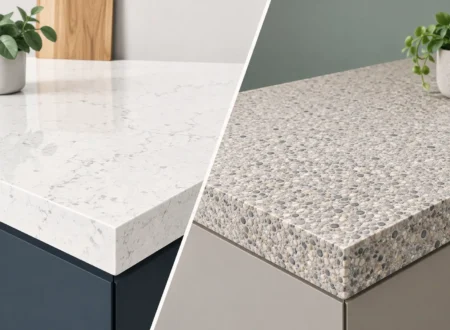
Hardscapes become more valuable when they support the experiences homeowners want outdoors. A kitchen should be located where the cook can remain part of the conversation, with enough counter space for serving rather than just a grill placed against a wall. Durable countertop materials, storage, lighting, and nearby seating turn it into a true entertaining hub.
Fire features add visual focus after sunset and extend the comfort of the backyard during cooler months. A linear fire feature can reinforce a modern pool design, while a fire pit or fireplace creates a more traditional gathering point. Placement is critical. Wind patterns, seating distance, clearances, and the relationship to the pool all affect how comfortable the feature will be.
Retaining and seat walls can solve grade changes while also providing useful seating and definition. Water features, from a simple spillway to a raised wall with cascading scuppers, introduce movement and sound. The most polished projects use these elements with restraint. A backyard does not need every available feature to feel luxurious. It needs a consistent design language and enough room for people to enjoy it.
Design Shade, Lighting, and Landscape Together
Hardscape alone can feel incomplete in the Las Vegas Valley. Shade is a practical necessity, not an afterthought. Patio covers, pergolas, cantilever umbrellas, and strategically placed structures can protect dining and lounging areas when the sun is highest. The right solution depends on the yard orientation, the desired amount of overhead coverage, and how much openness the homeowner wants to retain.
Lighting changes the function of a backyard after dark. Step lights improve safety, path lighting guides movement, and subtle wall or landscape lighting adds depth without creating glare. Kitchen task lighting and pool lighting should be planned with the same care as the decorative fixtures. Adding electrical pathways during construction is far easier than opening finished surfaces later.
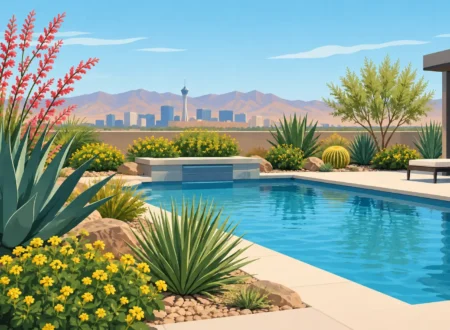
Landscape planting brings scale, softness, and seasonal color to masonry and paving. Drought-conscious plant selections can reduce water demand while still creating privacy and visual interest. The key is to leave sufficient planting volume and irrigation access. Small, crowded planting beds often struggle to support mature landscaping and can make even a well-built patio feel constrained.
Why a Unified Design-Build Plan Matters
A hardscape project touches several trades: excavation, grading, concrete, masonry, plumbing, electrical, pool construction, landscape installation, and finish work. Managing those pieces separately can create gaps between the plan and the finished backyard. A unified design-build approach coordinates elevations, materials, feature locations, and construction sequencing from the beginning.
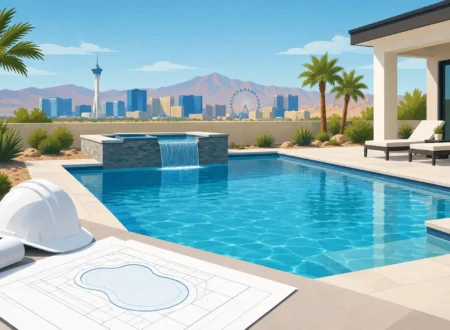
At Laguna Pool and Spa, professional 3D design helps homeowners see how pools, decking, kitchens, fire features, and landscaping will relate before construction begins. That visual certainty is particularly valuable when making decisions about deck size, coping colors, wall heights, and the flow between spaces. With more than 30 years of experience in the Las Vegas Valley, the team understands that the details beneath and behind the finished surface are just as important as what appears in a project photo.
A custom hardscape plan should also be realistic about budget. Large-format porcelain, extensive masonry, premium natural stone, and complex fire or water features can raise costs quickly. It may be wiser to invest in the structural work, drainage, and key focal areas first, then phase decorative additions later. The right recommendation depends on the property and the homeowner’s priorities, not a one-size-fits-all package.
When planning a backyard upgrade, bring photos of spaces you enjoy, note how your family entertains, and consider what you want to see from inside the home. Those simple decisions give a design team the direction needed to turn hot, empty square footage into an outdoor retreat built for real life.