 By
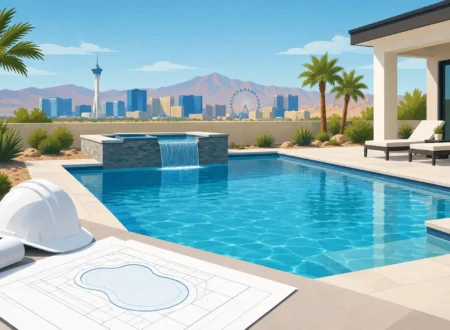
By A Las Vegas poolscape has to work harder than a typical backyard garden. Plants contend with reflected heat from decking, dry wind, intense sun, and occasional splash-out from treated pool water. The best drought tolerant pool plants meet those conditions without making the space feel bare, thorny, or difficult to maintain. Chosen well, they give a new pool or renovation the layered, resort-like finish that turns water, hardscape, shade, and outdoor living areas into one cohesive retreat.
The goal is not simply to use less water. It is to create a planting plan with the right scale, texture, shade, privacy, and sight lines for the way your family uses the yard. A low-growing plant that looks great beside a tanning ledge serves a different purpose than a specimen tree framing an infinity edge or a privacy screen around a spa.
What Poolside Plants Need to Handle in Las Vegas
Pool plants should be selected for more than their appearance at the nursery. Around a pool, heat reflects off travertine, concrete, tile, and water. Soil can dry quickly along hardscape edges, while wind can carry fine debris directly into the pool. Plants located near a raised spa, fire feature, or west-facing patio may experience even higher temperatures.
For that reason, favor plants that tolerate full sun, desert soils, and infrequent deep watering once established. Look for varieties with a tidy growth habit and minimal fruit, flowers, or leaf drop near the waterline. It is also wise to keep thorny plants, heavily shedding trees, and plants that attract large numbers of bees away from walkways, lounge areas, and pool entries.
Chlorinated or saltwater splash is another consideration. No landscape plant should be routinely soaked with pool water, but some handle occasional exposure better than others. Placing sensitive plants a few feet back from the coping and using durable ornamental grasses, agaves, or shrubs closest to high-splash zones can prevent disappointment later.
Best Drought Tolerant Pool Plants for Structure and Shade
Desert Willow
Desert willow brings an airy, natural canopy to a Las Vegas backyard without the dense, debris-heavy character of some traditional shade trees. Its narrow leaves and trumpet-shaped flowers soften contemporary hardscape and work especially well beside freeform pools or naturalistic water features.
It is drought tolerant once established and can be pruned to suit the scale of the yard. Like any flowering tree, it will drop some material seasonally, so it is best positioned near a seating area or property edge rather than directly over the pool.
Texas Mountain Laurel
Texas mountain laurel offers a more formal evergreen presence, with glossy foliage and fragrant purple blooms in spring. It works beautifully as a small specimen tree beside a spa patio or as an anchor in a Mediterranean or desert-modern landscape.
Its slower growth rate is an advantage in compact yards where homeowners do not want frequent pruning. Give it adequate room away from decking and structures, and let its mature shape become part of the long-term design rather than forcing it into a narrow planting bed.
Palo Verde
For a distinctly Southwestern statement, palo verde provides filtered shade, green bark, and bright spring color. The open branching structure preserves views across the yard, making it a strong fit for pool owners who want shade without creating a dark enclosure.
The trade-off is seasonal bloom and leaf litter. A professional landscape plan can place palo verdes where their visual impact is high but cleanup demands stay manageable – often beyond the immediate pool perimeter, framing a view or defining the edge of an outdoor kitchen area.
Plants That Add Clean Lines Around Modern Pools
Agave
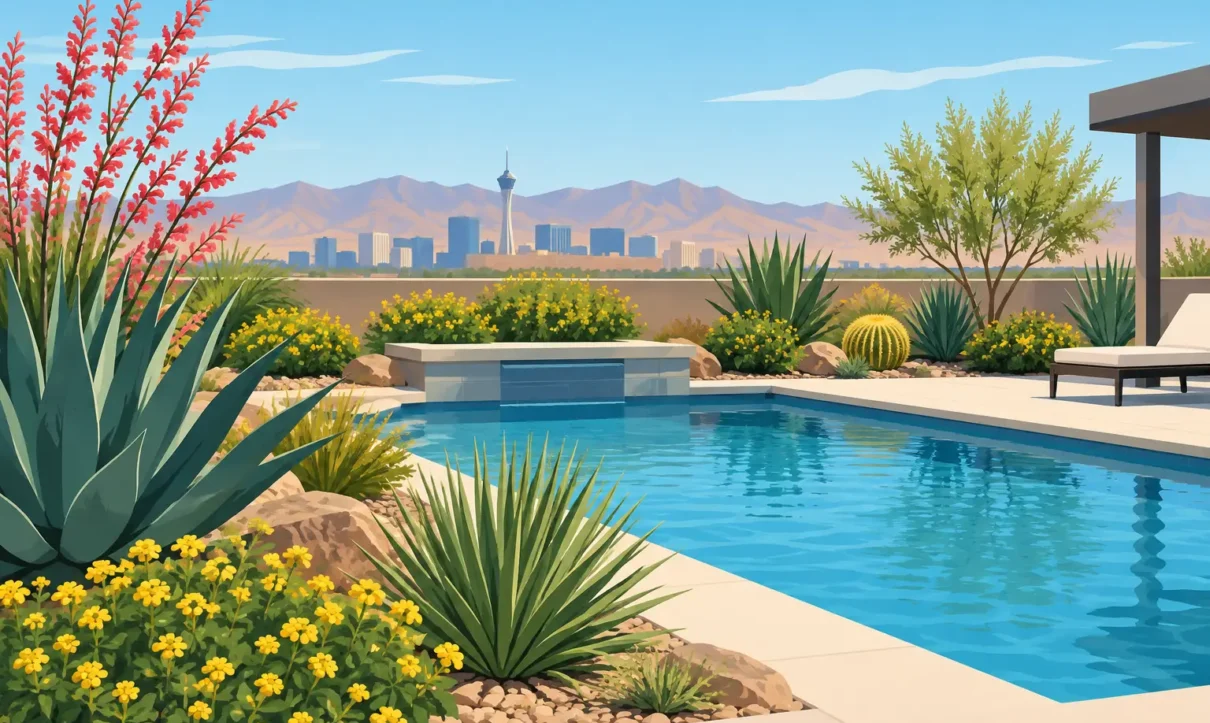
Agaves are among the most useful architectural plants in desert pool design. Their sculptural form provides year-round definition beside straight-edged pools, wet decks, raised planters, and fire features. Smaller varieties can make a sharp visual statement without overwhelming a narrow planting area.
Selection and placement matter. Many agaves have stiff terminal spines, so they should not sit beside a tanning shelf, a primary walking path, or any place children may brush past them. In those locations, choose softer-leaved cultivars or position the agave behind lower plants and decorative rock.
Desert Spoon
Desert spoon adds a fountain-like silhouette with narrow, blue-green leaves that hold their shape through heat and drought. It pairs well with clean-lined modern architecture and gives planted areas texture without producing broad leaves that end up in the skimmer.
Its mature spread should be considered from the beginning. Desert spoon looks best when it has breathing room, especially in a gravel or decomposed granite bed that contrasts with smooth pool decking.
Red Yucca
Red yucca is a reliable favorite for poolside borders because its grass-like foliage stays neat while tall coral flower spikes bring color above the planting bed. It handles heat, sun, and low water exceptionally well once rooted in.
Although it is called a yucca, red yucca is generally friendlier around active outdoor spaces than many sharp-leaved yucca varieties. Use it in repeating groups to guide the eye along a pool wall, define a pathway, or soften the base of a raised spa.
Blue Elf Aloe
Blue Elf aloe provides compact blue-gray foliage and orange flower spikes with a softer look than agave. It is particularly effective near contemporary pools where homeowners want desert character without a severe or overly spiky appearance.
This aloe does well in bright sun, though a little afternoon protection can help in the most exposed locations. Its compact size also makes it practical for smaller yards and narrow planter beds adjacent to a patio.
Low-Water Plants for Color, Privacy, and Movement
Bougainvillea
Bougainvillea brings vivid color to a pool environment, whether trained against a wall, allowed to spill over a raised planter, or used as a privacy screen along a property line. Its long bloom period can add a dramatic resort feel that few desert plants match.
It does have thorns, and fallen bracts can require cleanup. Keep it out of barefoot traffic areas and away from the immediate pool edge. Used behind a bench, along a perimeter wall, or beyond the main deck, it delivers color without becoming a safety concern.
Texas Sage
Texas sage earns its place in Las Vegas landscapes with silvery foliage, purple blooms, and impressive tolerance for heat and low water. It is an excellent choice for broad planting zones, especially where a homeowner wants screening that still feels relaxed and natural.
Avoid overwatering it. Texas sage performs better with well-drained soil and a restrained irrigation schedule, which makes it a good match for a water-conscious backyard. It can also be shaped lightly, but severe shearing often reduces its naturally attractive form.
Hop Bush
Hop bush creates an upright, dense screen with bronze-green foliage that complements desert stone, warm stucco, and dark pool finishes. It is useful when privacy from a neighboring property is a priority but the design calls for something more refined than a solid block wall.
It responds well to pruning and can be integrated into narrow side-yard planting areas. Because it is often used as a living screen, plan access for occasional maintenance rather than placing it where crews must reach across pool equipment or furniture.
Deer Grass
Deer grass provides movement, softness, and a welcome contrast to the hard lines of coping and paving. Its arching foliage is especially effective around boulders, along dry creek-style landscape features, and at transitions between a pool deck and a more natural desert planting zone.
Unlike many ornamental grasses, deer grass is well suited to hot, dry climates and does not demand constant irrigation. Cut it back periodically to refresh its appearance, and place it far enough from the pool that its fine blades do not become a recurring skimmer issue.
Lantana
Lantana supplies bright, long-lasting color in sunny beds and containers. It can be used to soften the base of a wall, fill gaps between larger structural plants, or add seasonal interest near an outdoor kitchen or conversation area.
Choose placement carefully because lantana attracts pollinators when blooming. It is better a short distance from lounge chairs and spa steps than directly beside them. Regular light trimming keeps it full and polished.
Design the Irrigation and Planting Zones Together
Even drought-tolerant plants need water while establishing roots, and a successful landscape does not treat every plant as though it has identical needs. Trees, flowering accents, grasses, and succulents should be grouped in hydrozones so each receives an appropriate irrigation schedule. Deep, less frequent watering encourages stronger roots and usually performs better than shallow daily watering.
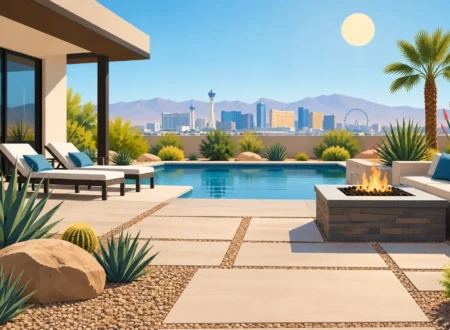
Material selection matters too. Decorative gravel, boulders, and properly installed edging help retain a clean look and reduce exposed soil around the pool. Rock should complement the home and hardscape rather than compete with the water. In a premium backyard environment, planting beds are not leftover spaces – they are part of the composition.
A professional 3D design process makes these choices easier to visualize before construction begins. It can show how mature trees will frame a pool, where shade will fall, how a privacy screen affects views, and whether plant forms support the architecture of the home. Laguna Pool and Spa has spent more than 30 years designing outdoor living environments for the Las Vegas Valley, where those practical details directly affect how a backyard looks and functions year after year.
The right plants should make the pool feel more inviting, not create another weekend maintenance project. Start with the areas where you want shade, privacy, color, or a stronger visual focal point, then let the planting plan support the way you want to live outside.