 By
By A pool deck has a bigger job than simply surrounding the water. In Las Vegas, it must handle intense sun, rapid temperature swings, wet bare feet, outdoor entertaining, and the visual demands of a well-designed backyard. When weighing pavers versus concrete decking, the right choice depends on how you use the space, the style of your home, the condition of the soil, and the level of long-term maintenance you prefer.
Both materials can create a polished, durable pool environment. The better option is not always the least expensive installation or the most dramatic showroom sample. It is the material that supports your complete outdoor-living plan – from the pool’s coping and water features to the patio cover, landscape lighting, fire feature, and outdoor kitchen.
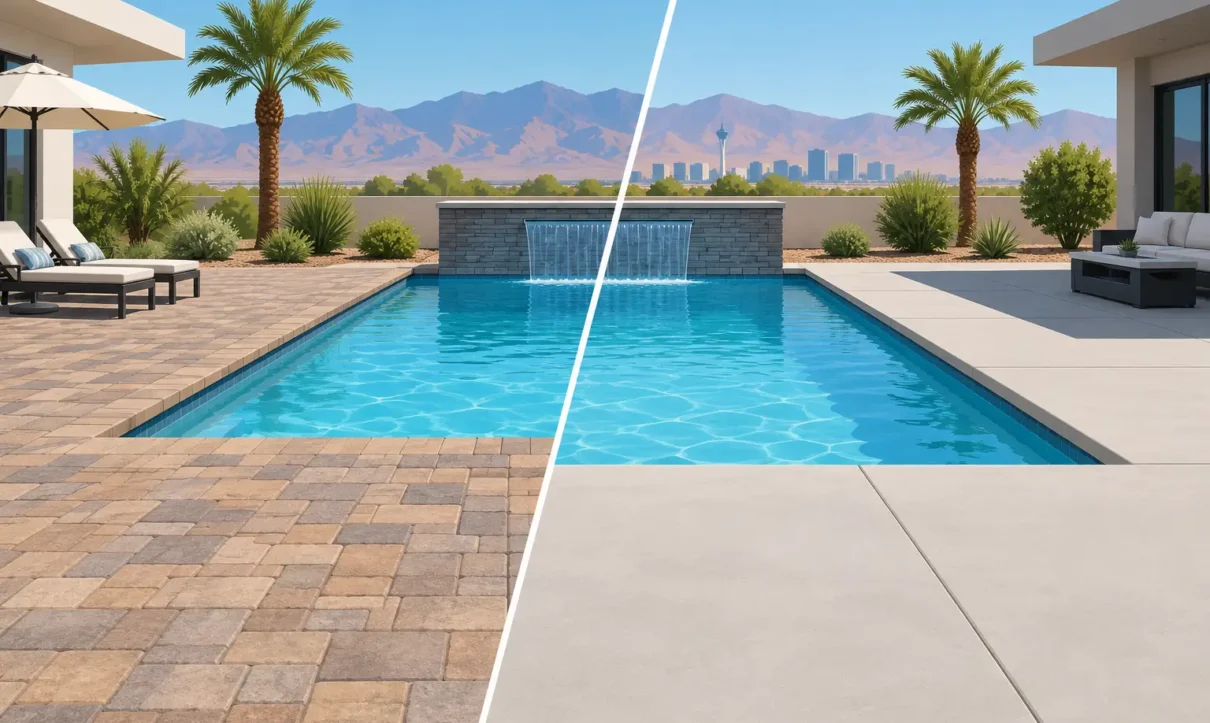
Pavers Versus Concrete Decking: The Core Difference
Concrete decking is poured in place, then finished with a texture, color, stamp pattern, or decorative treatment. It can be shaped around virtually any pool layout and creates a clean, continuous surface. For homeowners who prefer a streamlined contemporary look or need to cover a large deck area efficiently, concrete can be an excellent fit.
Pavers are individual units installed over a prepared base of compacted material and bedding sand. They are available in concrete, natural stone, porcelain, and other specialty materials, with a broad range of colors, sizes, and patterns. Pavers create visual movement through their joints and can make a backyard feel more detailed, tailored, and architectural.
The distinction matters most after years of use. A poured concrete slab acts as one connected surface. A paver deck is a flexible system of individual pieces. That difference affects cracking, repair options, drainage, and cost.
Heat Comfort Matters in the Las Vegas Valley
Deck temperature should be part of the material conversation from the first design meeting. Direct desert sun can make nearly any hardscape hot by midafternoon, especially darker colors and dense materials. Surface color, texture, shade planning, and the amount of exposed deck all influence how comfortable the area feels.
Light-colored pavers and lighter concrete finishes generally reflect more heat than dark surfaces. Certain natural-stone and porcelain options may also be selected for their temperature performance, but no material should be chosen based on appearance alone. Ask to see samples outdoors, in direct sunlight, rather than only under indoor showroom lighting.
A thoughtful deck design can reduce heat regardless of material. Patio covers, pergolas, strategically placed trees, umbrellas, and shaded seating zones make a major difference. In a complete backyard plan, the deck, shade structures, pool orientation, and furniture layout should work together. A cooler-looking surface is helpful, but shade is what extends the hours your family and guests can comfortably enjoy the space.
Durability and Movement: Where Each Material Performs Best
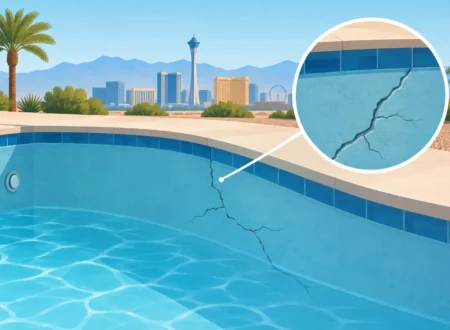
Concrete is strong and dependable when installed on a properly prepared base with appropriate control joints. Still, concrete can crack as the ground moves or as the slab expands and contracts. Control joints are designed to guide cracking into less noticeable lines, but they cannot guarantee that a deck will remain completely crack-free over time.
In Las Vegas, soil conditions and drainage deserve serious attention. Water from irrigation, rain runoff, or pool splash-out should not collect beneath or beside a deck. Proper grading and base preparation are essential whether the project uses concrete or pavers.
Pavers are often favored for their ability to accommodate minor ground movement. Because they are installed as individual pieces with jointing material between them, a paver surface has more flexibility than a monolithic concrete slab. If settling occurs in a localized area, the affected pavers can often be lifted, the base corrected, and the pavers reset.
That does not mean pavers are maintenance-free or immune to installation problems. A weak base, poor edge restraint, or inadequate compaction can lead to shifting, uneven areas, and joint-sand loss. The performance of either option depends heavily on professional site preparation and installation craftsmanship.
Repair Is Usually Easier With Pavers
When a concrete deck cracks significantly, repairs may involve patching, resurfacing, decorative overlays, or slab replacement. A skilled contractor can improve the appearance, but color matching and blending repairs into an older concrete finish can be difficult.
Pavers offer a practical advantage for targeted repairs. If a plumbing repair, electrical upgrade, or deck settlement affects one section, individual units can be removed and reinstalled. Keeping several extra pavers from the original project is wise, especially for a distinctive color or pattern that may change over time.
For homeowners planning a major pool renovation, this repair flexibility can be valuable. It allows a deck to adapt more easily when adding a spa, water feature, landscape lighting, drainage improvements, or a new outdoor kitchen later.
Appearance and Design Flexibility
Concrete creates a broad, uninterrupted plane that suits modern pools, minimalist architecture, and large entertaining areas. It can be broom-finished for traction, textured, sand-finished, colored, stamped, or treated with decorative coatings. A well-executed concrete deck can feel refined rather than basic, particularly when paired with premium coping, tile, and carefully designed landscape elements.
Pavers bring more pattern, dimension, and customization to the deck. Large-format pavers can support a sleek, contemporary setting, while smaller modular patterns can complement Mediterranean, transitional, or traditional homes. Border details, contrasting bands, and coordinated coping can give the pool area a more intentional, finished appearance.
The trade-off is visual preference. Some homeowners appreciate the character of paver joints and patterned layouts. Others prefer the quiet simplicity of concrete. The goal is to choose a surface that complements the home and does not compete with focal features such as an infinity edge, fire bowls, raised spa, or cascading spillway.
Maintenance, Drainage, and Safety Around the Pool
Both surfaces require routine care. Concrete should be cleaned periodically, and many decorative finishes benefit from resealing on a schedule recommended for the specific product and exposure conditions. Sealer can help preserve color and protect against staining, but the wrong product or application can create an overly slick surface when wet. Slip resistance should always be addressed in the finish selection.
Pavers may need occasional cleaning, joint-sand replacement, and resealing depending on the material and desired appearance. Weeds are not typically caused by growth from below a properly built paver deck; they usually develop when windblown seeds settle into joints. Regular cleaning helps keep the surface looking sharp.
Drainage design is equally important. A pool deck should direct water away from the home and avoid areas where puddles create slip hazards. Paver joints can allow some water to move through the surface, while concrete requires deliberate slope and drainage placement. Neither approach replaces the need for a professionally planned drainage strategy.
Cost: Look Beyond the Initial Price
Concrete is often the more budget-conscious choice at installation, especially for straightforward layouts and standard finishes. Decorative treatments, complex curves, demolition, difficult access, extensive drainage work, and premium coatings can increase the total substantially.
Pavers commonly cost more upfront because of material selection, excavation, base construction, compaction, cutting, and detailed installation. However, their repairability and design versatility can make them a strong long-term value for homeowners creating a higher-end outdoor retreat.
The most useful comparison is not simply price per square foot. Consider the full scope: demolition of existing decking, access to the backyard, drainage corrections, coping, steps, retaining walls, landscape integration, electrical needs, and the expected future use of the space. A deck that looks economical on paper may become costly if it does not support the larger renovation plan.
Which Pool Deck Is Right for Your Backyard?
Choose concrete decking when you want a clean, continuous surface, a broad range of finish options, and an efficient solution for a larger area. It is particularly effective for modern designs and homeowners who prefer a low-detail visual style.
Choose pavers when repair flexibility, distinctive patterning, and the ability to accommodate minor movement are priorities. They are often a natural fit for custom pool renovations and outdoor environments where the deck is a central design feature rather than just a walking surface.
For some projects, the strongest solution is a combination of materials. Concrete may define a large lounge area, while pavers create a dining terrace or pathway. Coordinating those materials with coping, turf, planting beds, and shade structures can add depth without making the yard feel busy.
With more than 30 years of experience in the Las Vegas Valley, Laguna Pool and Spa approaches decking as part of the entire backyard environment, not as an isolated construction decision. Professional 3D design can help you see how each surface works with the pool, spa, hardscape, and entertainment features before construction begins.
A pool deck should feel comfortable underfoot, perform reliably through desert conditions, and make the view from inside your home even better. The right material is the one that makes your backyard easier to enjoy for years to come.