 By
By A hairline line across a pool’s finish can be easy to dismiss, especially when the water is clear and the equipment is running normally. But homeowners asking why pool plaster cracks are right to look closer. Some cracks are primarily cosmetic effects of the plaster curing process. Others can point to movement in the pool shell, problems beneath the finish, or conditions that deserve prompt professional evaluation.
In Las Vegas, where intense heat, dry air, mineral-rich fill water, and dramatic temperature swings can all affect a pool environment, context matters. The crack’s size, pattern, location, and timing tell far more of the story than the crack alone.
Why Pool Plaster Cracks: The Main Causes
Pool plaster is the finished interior surface applied over a gunite or shotcrete pool shell. It is a cement-based material, commonly blended with marble aggregate, quartz, or pebble finishes. Like other cementitious materials, it changes as it cures, dries, and responds to its environment.
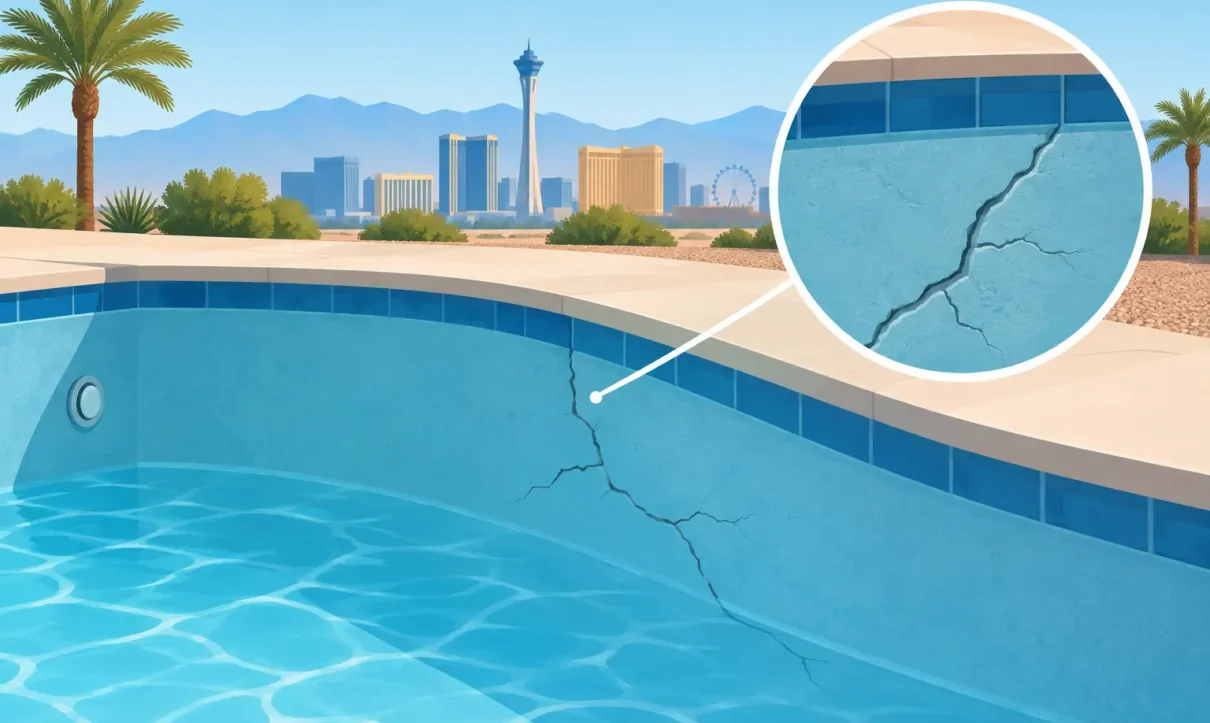
Fine surface cracking, sometimes called checking or crazing, can occur as plaster cures and shrinks slightly. These shallow, web-like lines may be most visible when the pool is drained or when sunlight hits the surface at a particular angle. They are not automatically evidence of a failing pool structure, but they should still be reviewed if they expand, become rough, or appear alongside other concerns.
More significant cracks generally stem from one of several conditions: movement in the underlying shell, an issue with how the plaster was applied or cured, separation between layers, or long-term exposure to unfavorable water chemistry. Determining the real cause before repairing the surface is essential. Filling a crack without addressing the source can leave a homeowner with the same issue again later.
Normal Curing and Shrinkage
Fresh plaster needs controlled curing to develop strength and a consistent appearance. As water leaves the material and the cement hydrates, minor shrinkage can create superficial hairline cracks. Application conditions matter. Excessive heat, wind, direct sun, or an improperly managed start-up process can cause the finish to dry too quickly.
This is one reason quality construction is about more than the day plaster is installed. Proper scheduling, material preparation, application technique, filling procedures, and early water balancing all work together to protect a new finish. In the Las Vegas Valley, experienced crews plan around desert conditions rather than treating the climate as an afterthought.
Movement in the Pool Shell or Surrounding Ground
A pool’s plaster is only as stable as the structure beneath it. If the concrete shell moves, the finish may crack in a more defined line, often running across a wall, floor, step, bench, or around a penetration such as a return fitting or light niche.
Ground conditions, drainage, nearby excavation, settlement, and structural design can all contribute to movement. Pools are substantial concrete structures, yet they still require thoughtful engineering, excavation, steel placement, and shell construction. A crack that continues through the plaster and into the gunite or shotcrete shell is different from a shallow finish crack and calls for a closer assessment.
Not every structural crack means a pool is leaking or unsafe. Some cracks can be stable, while others may change over time. The appropriate repair depends on whether movement is active, where the crack is located, and whether it affects the pool’s watertight integrity.
Plaster Application or Bonding Problems
Plaster needs a clean, properly prepared substrate and the right application conditions to bond well. If the surface beneath the plaster is contaminated, excessively dry, improperly prepared, or damaged, the finish may not adhere consistently. This can lead to cracking, hollow-sounding areas, flaking, or sections that eventually delaminate.
In a renovation, the existing pool surface requires just as much attention as new construction. A sound renovation plan identifies whether the old finish can be prepared for a new surface or whether underlying repairs are needed first. Skipping that evaluation may reduce upfront cost, but it can compromise the life of the new finish.
Water Chemistry That Attacks the Finish
Plaster is not maintenance-free. Water that stays too acidic can etch the surface, making it rougher and more vulnerable over time. Water with excessive calcium hardness, high alkalinity, or imbalanced saturation can contribute to scale, discoloration, and mineral deposits that make existing cracks more noticeable.
Chemistry alone does not usually create a clean, structural-looking crack in a healthy shell. Still, poor water balance can weaken the surface around small imperfections and shorten the service life of plaster. Desert pools also lose water quickly to evaporation, which concentrates minerals and makes steady testing especially valuable.
Homeowners should avoid assuming that adding more chemicals is the answer to a visible crack. The right approach starts with testing the water, inspecting the finish, and identifying whether the concern is cosmetic, chemical, or structural.
Which Pool Plaster Cracks Need Attention?
A single hairline crack may not require immediate resurfacing, but it should not be ignored without a baseline. Take clear photos, note its location, and watch for changes. If the line stays narrow and stable, it may be a finish-level issue. If it lengthens, widens, develops a vertical offset, or returns after repair, further investigation is warranted.
Professional evaluation is especially valuable when a crack is accompanied by unexplained water loss, loose plaster, rust staining, hollow areas, tile separation, deck cracking, or a noticeable change in the pool’s water level. These symptoms do not always share the same cause, but together they can help identify whether there is a leak, shell movement, or a finish failure.
Cracks around steps, tanning ledges, spa spillways, light niches, skimmers, and plumbing penetrations deserve particular attention because these areas combine changes in geometry with mechanical components. A repair in one of these locations may require more than a surface patch to remain durable.
How Las Vegas Conditions Affect Pool Finishes
Las Vegas pools work hard. Summer surfaces absorb intense heat, water evaporates quickly, and a pool can experience meaningful temperature changes between daytime and overnight conditions. Those conditions do not guarantee cracking, but they increase the value of good design, disciplined installation, and consistent maintenance.
Drainage is also a practical concern. Water should move away from the pool structure and surrounding deck rather than collecting near the shell. Thoughtful hardscape grading, expansion joints, and integrated landscape design help manage water around the backyard environment. This is particularly relevant during heavy monsoon rain, when a brief storm can expose drainage weaknesses that are invisible during dry weather.
A well-designed outdoor retreat considers the pool, deck, drainage, shade structures, landscaping, and features such as spas or fire elements as connected systems. That coordinated view helps prevent one project decision from creating a problem for another part of the yard.
Repair Options Depend on the Cause
There is no single repair for cracked pool plaster. Shallow cosmetic cracks may be monitored or addressed as part of a future resurfacing project. Localized finish damage may be repaired, although color and texture matching can be difficult on an aged surface. If broad areas of plaster are etched, stained, rough, or heavily checked, replastering may offer the most consistent result.
When a crack extends into the shell, the repair may involve opening the crack, preparing it properly, applying an appropriate repair material, and confirming that the structure is stable before a new finish is installed. Leak testing may also be appropriate when water loss is part of the concern.
The trade-off is straightforward: a quick cosmetic patch can be reasonable for a small, stable imperfection, while a larger investment is often smarter when the finish is near the end of its useful life or the crack reflects a deeper issue. A site inspection can clarify which path protects both the pool and the homeowner’s budget.
Preventing Future Cracks Starts Before Plaster Day
The best protection begins with qualified pool design and construction. Proper excavation, steel reinforcement, engineered shell work, plumbing installation, drainage planning, and finish preparation create the foundation for a lasting interior surface. For renovations, a careful inspection of the existing shell should guide the scope rather than simply covering old conditions with a new finish.
After installation, maintain balanced water chemistry, keep water at the recommended level, and address leaks or deck drainage issues early. Avoid draining a plaster pool without professional direction, particularly during extreme heat, because an empty pool faces different stresses and can be damaged by groundwater conditions or surface exposure.
With more than 30 years of Las Vegas Valley experience, Laguna Pool and Spa approaches pool finishes as part of the full backyard system, not as an isolated cosmetic layer. If you see a new or changing crack, a professional inspection can replace uncertainty with a practical repair plan and help keep your pool ready for the backyard moments it was built to support.