
 By
By A pool should not make guests pause at the edge and decide how to get in. A well-planned beach entry pool design creates a gradual, walk-in transition from patio to water, giving a Las Vegas backyard the relaxed feeling of a resort shoreline. It is also one of the most flexible pool features available, especially for households that entertain, have young children, or want an easier way to enjoy the water without committing to a traditional deep-end entry.
The feature is simple in concept, but it is not a simple add-on. The slope, finish materials, drainage, circulation, shade, and surrounding hardscape all influence whether a beach entry becomes the favorite part of the backyard or an underused stretch of shallow water. The strongest results come from designing it as part of the entire outdoor environment from the beginning.
What Defines a Beach Entry Pool Design?
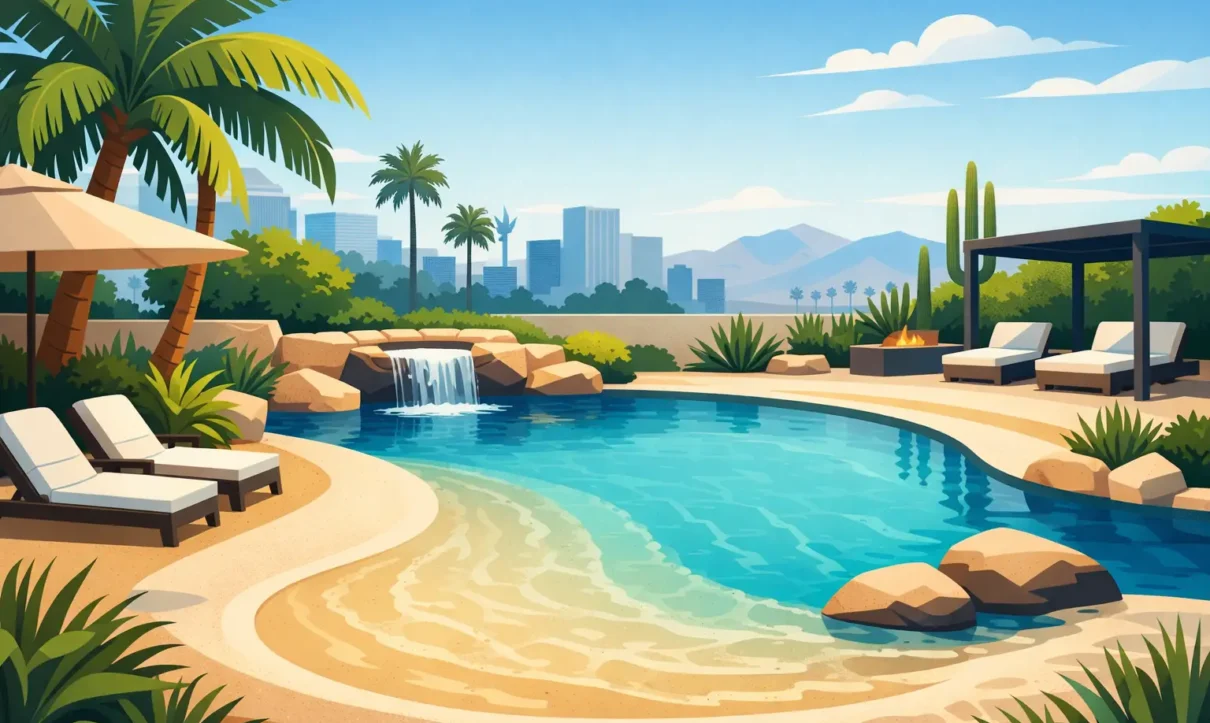
Also called a zero-entry pool, a beach entry starts at deck level and gradually slopes into the pool. Instead of stepping down from a coping line, swimmers can walk from dry patio into ankle-deep water, then deeper water at a comfortable pace. The transition can be broad and open like a shoreline, curved to follow a freeform pool, or integrated into a more geometric contemporary layout.
That gradual entry gives the pool a different purpose than stairs alone. Children can splash in the shallows while adults lounge nearby. Guests who do not want to fully swim can cool their feet from a partially submerged chair. Pets and family members with mobility concerns may find the walk-in approach more approachable than a ladder or steep steps.
In Las Vegas, where intense summer temperatures encourage long days outdoors, the shallow water zone can function as its own gathering area. However, it needs enough room to be genuinely useful. A narrow slope may look attractive in a rendering but provide little space for seating, play, or relaxed entry once the pool is complete.
Start With How Your Household Will Use the Water
The best beach entry pool design is not determined by a single photo. It begins with the way the backyard will work on a typical weekend, during a larger gathering, and over the years as your needs change.
For families with young children, the entry can create a controlled area for supervised water play. This does not replace supervision or proper barriers, but it does give younger swimmers a gentler place to get acquainted with the pool. A homeowner focused on entertaining may prefer a wider shelf near the entry, where in-pool loungers, umbrellas, and conversation seating can be placed without interrupting the primary swim path.
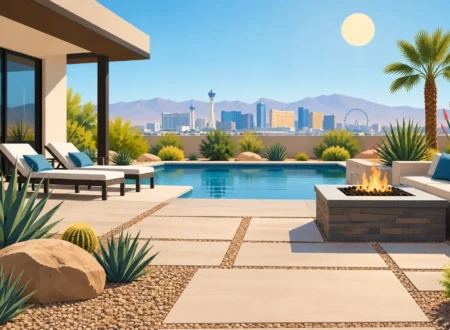
For a more architectural backyard, a crisp linear entry can pair beautifully with a rectangular pool, raised spa, fire feature, and large-format pavers. A freeform pool may call for a more natural curve, with boulders, planting pockets, or a cascading water feature that supports a lagoon-inspired setting. Neither approach is inherently better. The right choice depends on the home’s architecture, the available yard space, and the atmosphere you want to create.
It is also worth considering who will maintain the pool. A larger shallow area can collect windblown debris, especially when landscaping is close to the water. In the Las Vegas Valley, thoughtful placement of trees, planters, and drainage routes can make routine care easier while protecting the clean, open look that makes a beach entry appealing.
Size, Slope, and Placement Matter More Than Most Homeowners Expect
A beach entry occupies meaningful square footage. In a compact yard, that space must be balanced against the pool’s swim area, spa, deck circulation, and other priorities such as an outdoor kitchen or covered patio. The feature can still work in smaller backyards, but it may need a tighter, more deliberate shape rather than a long, wide shoreline.
The slope must feel gradual underfoot while still allowing the pool to reach the desired depth within the available footprint. That affects the entire pool layout. A long entry can reduce the length available for lap swimming or a deeper play area, while a short entry can feel abrupt and lose the comfortable, walk-in effect homeowners expect.
Placement deserves the same level of attention. A beach entry that faces the main patio can become a visual focal point and an easy access point for guests. Positioning it near a covered outdoor living area may provide better sightlines for parents and a more inviting route from seating to water. On the other hand, the entry should not create a bottleneck between the house, grill, spa, and pool.
Professional 3D design is particularly valuable here. Seeing the grade changes, furniture placement, waterline, shade structures, and traffic flow before construction helps homeowners make decisions with confidence. Laguna Pool and Spa uses this process to show how the pool and surrounding backyard features will work together, rather than treating each element as a separate project.
Materials Should Be Chosen for Comfort and Desert Durability
Beach entries put bare feet in direct contact with both submerged surfaces and sun-exposed deck materials. In Las Vegas, surface temperature is not a minor detail. Some materials become uncomfortable quickly in full sun, while others provide a more forgiving walking surface.
The pool interior finish should offer traction without feeling abrasive. Textured finishes, carefully selected tile, and natural-looking materials can all work, but the right application matters. A finish that looks ideal in a sample may behave differently across a broad, shallow area where water moves gently and sunlight reflects strongly.
The deck surrounding the entry should complement the pool finish while supporting safe footing. Light-colored pavers or concrete finishes can help reduce heat absorption compared with darker materials, although color alone does not determine surface temperature. Texture, exposure, material density, and shade all play a role.
A cohesive material plan also improves the visual transition from patio to water. A beach entry is most convincing when the deck, coping, interior finish, and landscaping feel intentionally connected. That does not require a literal tropical theme. A refined desert-modern backyard can use clean lines, pale stone tones, sculptural planting, and a soft entry slope to create a distinctly resort-like experience.
Build Safety and Accessibility Into the Design
The appeal of a walk-in pool entry is ease of access, but it still requires careful safety planning. The transition from deck to water should be visibly defined, especially where light-colored finishes and shallow water can make depth harder to judge. Contrasting tile accents, integrated handrails where appropriate, and thoughtful lighting can help guests understand the edge and slope.
For households with children, a beach entry should be designed alongside required pool barriers, self-closing gates, alarms, and supervision practices. The shallow water may feel less intimidating, but it remains water and deserves the same safeguards as every other area of the pool.
Lighting is equally important for evening use. Underwater lights can trace the entry slope, while landscape and path lighting can clarify the route around the deck without creating glare. A well-lit backyard is more comfortable for entertaining and makes the pool area easier to navigate after sunset.
Consider the Whole Backyard, Not Just the Pool Edge
A beach entry is often the beginning of a larger outdoor-living plan. It can connect naturally to a wet deck, raised spa, tanning shelf, shade structure, or outdoor kitchen. The goal is not to add every available feature. It is to create distinct zones that support the way you spend time outside.
For example, a family that hosts frequent gatherings may prioritize a broad pool entry near an outdoor kitchen and covered seating area. A homeowner creating a quiet retreat may place the entry near a spa, fire feature, and more private landscape screening. In both cases, the pool should preserve clear walking paths and enough deck area for furniture, towels, and everyday use.
Budget decisions should be made with this full picture in mind. The cost of a beach entry is influenced by its size, structural complexity, finish selections, lighting, water features, and the amount of decking or landscape work needed around it. During a new build, integrating the feature early is generally more efficient than trying to force it into a completed pool later. For a renovation, feasibility depends on the existing shell, site conditions, plumbing, and the extent of the remodel.
A beach entry pool design succeeds when it feels natural from every angle: easy to enter, comfortable underfoot, proportionate to the yard, and connected to the spaces where people gather. Bring photos and wish-list ideas to a professional design consultation, but also be ready to discuss how your family actually lives outdoors. That conversation is where a beautiful pool feature becomes a backyard you will use for years.


7 Comments
Comments are closed.