 By
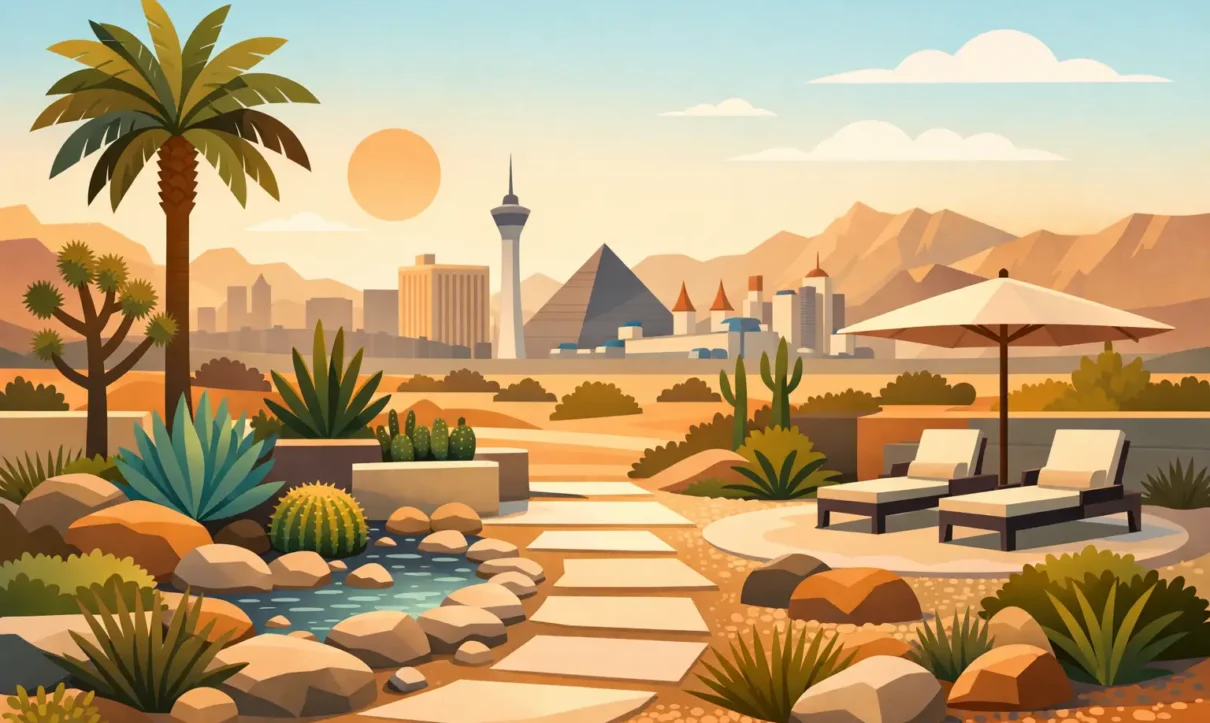
By A Las Vegas backyard has to perform under conditions that would overwhelm many traditional landscape plans: intense sun, reflective heat, dry air, wind, and long stretches without meaningful rainfall. The most successful desert friendly landscaping trends are not about making a yard look sparse or giving up the feeling of a lush retreat. They are about using water wisely, controlling heat at the ground level, and creating comfortable spaces that invite people outside from morning through evening.
For homeowners planning a new pool, renovating an older backyard, or building a complete outdoor environment, desert-conscious design is now part of the luxury conversation. The goal is a backyard that feels intentional and resort-ready while respecting the realities of the Las Vegas Valley.
Desert-Friendly Landscaping Trends That Add Comfort
The strongest trend is a move away from treating landscaping, hardscape, shade, and water features as separate decisions. A pool may be the visual center of the yard, but the materials around it determine whether the space feels cool, usable, and complete. Professional outdoor design brings these layers together before construction begins, so planting beds, deck elevations, circulation paths, drainage, lighting, and gathering areas support one cohesive plan.
This integrated approach matters in the desert. A beautiful patio without shade may sit unused for much of the day. A row of plants chosen only for appearance may struggle beside hot masonry or reflect too much heat toward a pool deck. The better solution is to design each area around how the homeowner will actually use it – relaxing after work, entertaining friends, dining outdoors, or creating a quieter view from inside the home.
Layered Shade Instead of One Oversized Structure
Patio covers remain a valuable part of desert outdoor living, especially over outdoor kitchens and dining areas. But current designs often combine structural shade with living shade rather than relying on a single large roof. A covered gathering zone can be paired with carefully positioned desert trees, tall architectural plants, and open areas that still allow winter sun into the yard.
This layered strategy creates more visual depth than a fully covered backyard while helping reduce heat buildup near seating areas. Placement is critical. Trees should be selected for their mature size, root behavior, litter, and spacing from pools, walls, and utility lines. A tree that provides welcome afternoon shade can become a maintenance issue if it constantly drops leaves into the water or crowds a deck years later.
Cooler, More Purposeful Hardscape
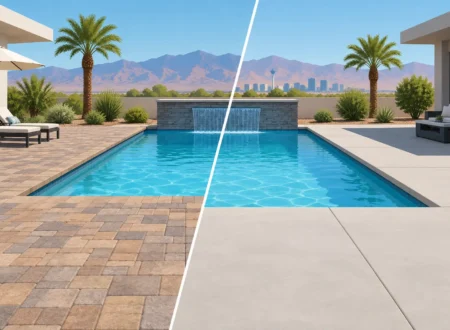
Hardscape is taking on a larger role in desert landscape design. Large-format pavers, textured concrete, porcelain tile, and natural-stone accents can establish a clean, contemporary foundation for the entire backyard. The right material palette also helps organize the space, defining a pool lounge, fire feature seating area, outdoor kitchen, or pathway without cluttering the yard with excessive plant beds.
Color selection deserves more thought than many homeowners expect. Very dark surfaces can become uncomfortably hot in direct Las Vegas sun, while bright white materials may produce glare around a pool. Mid-tone finishes, subtle texture, and thoughtful shade placement often offer the best balance of comfort and visual appeal.
Permeable pavers and gravel-based drainage zones are also appearing more often in desert-friendly plans. They can help manage runoff during sudden storms and reduce the amount of uninterrupted impervious surface in a yard. They are not a substitute for proper site drainage, however. Grading, drain locations, and hardscape elevations must be resolved as part of the construction plan, particularly when a pool, patio cover, and multiple amenities are being added at once.
Water-Wise Plants With More Character
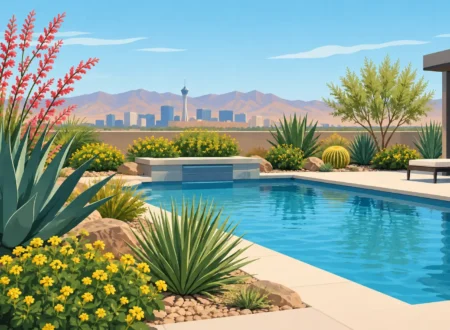
The old image of desert landscaping as rock, cactus, and little else is fading. Today’s water-wise gardens use a richer combination of plant forms, seasonal color, and sculptural texture. The key is choosing plants adapted to Southern Nevada conditions and grouping them by water needs rather than mixing thirsty species with low-water selections.
Desert willow, palo verde, olive varieties suited to the region, Texas ranger, red yucca, agave, hesperaloe, lantana, and ornamental grasses can create movement and structure without demanding the irrigation profile of a traditional lawn. Flowering plants can add color at different times of year, while upright forms soften block walls and create privacy without the heaviness of a solid hedge.
Native and desert-adapted plants still need a proper establishment period. “Low water” does not mean “no water,” especially during the first seasons after installation. Drip irrigation, pressure regulation, correct emitter placement, and seasonal controller adjustments are what make a water-wise planting plan work over time.
Artificial Turf Used Selectively
Artificial turf remains popular in Las Vegas, but the trend is toward restraint. Instead of covering every available surface in synthetic grass, homeowners are using it as a focused soft zone between hardscape areas, near a putting green, beneath play equipment, or beside a lounge space. This approach preserves the clean visual contrast turf can provide without turning the backyard into a broad heat-reflective expanse.
Quality, installation, and location make a difference. Turf can become hot in direct sun, and lower-grade products may show seams, flatten, or drain poorly. A design that combines smaller turf areas with pavers, planted beds, decomposed granite, and shade generally looks more tailored and gives the yard more variety.
Poolscapes Designed as Complete Retreats
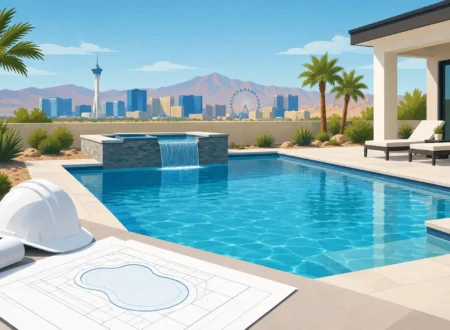
In a desert backyard, a poolscape is more than a body of water surrounded by deck material. It can become the cooling centerpiece of a carefully planned outdoor retreat. Current designs favor clean waterlines, generous tanning ledges, integrated spas, raised walls with cascading spillways, and wet decks that create a visual connection between the pool and surrounding landscape.
A beach entry or shallow lounge area can be especially appealing for families and homeowners who enjoy relaxed poolside use. For compact yards, a smaller geometric pool with an integrated spa may provide more usable deck space than a larger pool that consumes the entire footprint. It depends on whether the priority is swimming, entertaining, visual impact, or year-round spa use.
Water features should be chosen with both ambiance and practicality in mind. A sheer descent or small spillway can add movement and sound without overwhelming the yard. Larger cascading features create more dramatic impact but may require more maintenance and can increase evaporation when water is exposed to wind. The best feature is one that fits the scale of the space and the homeowner’s preferred level of upkeep.
Outdoor Lighting That Extends the Evening
Because summer daytime temperatures can limit outdoor use, evenings are when many Las Vegas backyards come alive. Low-voltage landscape lighting is shifting from bright, uniform illumination to layered lighting with purpose. Path lights improve circulation, uplights bring dimension to specimen trees and textured walls, and step lights make changes in elevation safer.
Warm color temperatures generally create a more welcoming atmosphere around patios, pools, and fire features than harsh blue-white lighting. The goal is not to light every inch of the yard. It is to create a comfortable visual rhythm, highlight important features, and preserve enough shadow for the landscape to feel calm after dark.
Lighting should be planned before final planting and hardscape installation whenever possible. This avoids exposed wiring, awkward fixture placement, and the costly disruption of completed surfaces later.
Fire Features With a Defined Job
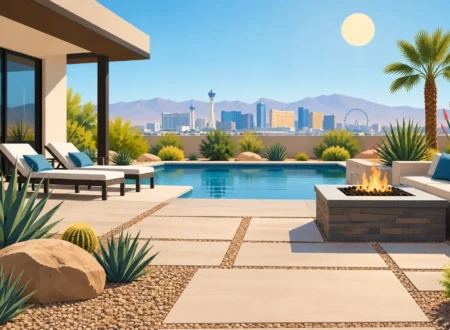
Fire bowls, linear fire features, and built-in fireplaces continue to anchor outdoor gathering spaces. In the desert, they are most useful during cooler months and after sunset, when they extend the season for outdoor dining and conversation. They also create a strong focal point from inside the home, especially when aligned with sliding doors, windows, or a covered patio.
The current preference is for fire features that feel integrated with the architecture rather than added as an afterthought. A low fire wall can help define the edge of a pool lounge, while a fireplace can give an outdoor kitchen or covered patio a sense of permanence. Clearance requirements, fuel access, wind exposure, and seating distance all need to be accounted for early in the design.
Start With a Plan Built for Your Property
A trend should never override the character of the home, the size of the yard, or the way a family lives outdoors. The most valuable desert-friendly landscape is one that offers shade where it is needed, efficient irrigation where plants need it, durable surfaces underfoot, and spaces that feel natural to use.
With more than 30 years of experience in the Las Vegas Valley, Laguna Pool and Spa approaches backyard projects through professional design and 3D visualization, helping homeowners see how pools, landscaping, hardscape, and outdoor amenities will work together before construction begins.
A well-planned desert backyard does not need to imitate a tropical resort to feel restorative. It can celebrate the region’s light, texture, and open sky while giving your home a cooler, more comfortable place to gather. Start by looking at where the afternoon sun lands, where people naturally want to sit, and what view you want to enjoy when the day finally cools down.
1 Comment
Comments are closed.