 By
A Las Vegas pool can look spectacular at noon and still be difficult to enjoy without a place to step out of direct sun. Water reflects heat, pale decking intensifies glare, and a beautiful outdoor kitchen loses much of its value if guests cannot comfortably sit nearby. The best poolside shade solutions are not an afterthought. They are a core part of planning a backyard that works through long summer days, family gatherings, and evenings by the spa.
The right choice depends on how you use the space, where the sun moves across the yard, and whether shade needs to protect a dining area, a shallow lounge shelf, a children’s play zone, or the pool deck itself. In the Las Vegas Valley, durable materials, thoughtful placement, and proper structural design matter as much as the style of the shade feature.
Best Poolside Shade Solutions for Lasting Comfort
Permanent shade structures generally provide the greatest comfort and long-term value because they are designed around the pool, hardscape, and home. Portable options can be useful, but they rarely deliver the coverage or wind resistance needed for a primary entertaining area.
Solid patio covers
A solid patio cover is often the most practical answer for homeowners who want dependable shade beside the house. It can shelter an outdoor kitchen, dining table, lounge area, or transition space between the home and pool. With the right ceiling finish, lighting, fans, and electrical planning, it becomes an outdoor room rather than simply a roof.
For Las Vegas properties, a solid cover can significantly reduce direct heat on a patio, but it should be carefully sized. Extending it too far toward the pool may make the backyard feel darker or block open views from inside the home. A professional design plan can balance shade with sunlight on the water, preserving the bright, resort-style character many homeowners want.
Pergolas and louvered patio covers
A pergola introduces architectural definition without completely closing in the backyard. Traditional open-slat pergolas create filtered shade and work especially well above an outdoor dining area, bar seating, or a lounge zone set back from the pool edge. They can also establish a visual connection between the house, pool, and landscaping.
The trade-off is straightforward: an open pergola does not provide complete midday protection. Adding shade fabric, retractable canopies, or climbing plant material can improve coverage, although those choices require maintenance and should be evaluated for heat, wind, and debris around the pool.
For more control, adjustable louvered patio covers allow homeowners to open the roof for sun and sky views or close it for shade. These systems can feel especially luxurious near an outdoor kitchen or elevated seating area. Because they involve moving components, drainage planning, electrical options, and structural attachment, they are best incorporated into the overall backyard design rather than installed as a last-minute addition.
Freestanding cabanas and pool pavilions
A freestanding cabana or pavilion is a strong choice when the shade destination needs to sit closer to the water than the home. It can frame a view of an infinity edge, create a protected conversation area near a spa, or give a large yard a distinct resort-style focal point.
Unlike a house-attached patio cover, a pavilion can be positioned where shade is most needed during the afternoon. It may include a bar, television wall, fireplace, ceiling fans, or storage for towels and pool accessories. The investment is higher than a simple umbrella, but the result can turn an open pool deck into a complete entertainment environment.
Flexible Shade for Loungers and Pool Decks
Not every area calls for a permanent structure. Flexible shade is valuable over chaise lounges, tanning ledges, and sections of deck that benefit from seasonal adjustment. The key is selecting products built for outdoor exposure and locating them so they do not interfere with pool circulation or views.
Cantilever umbrellas
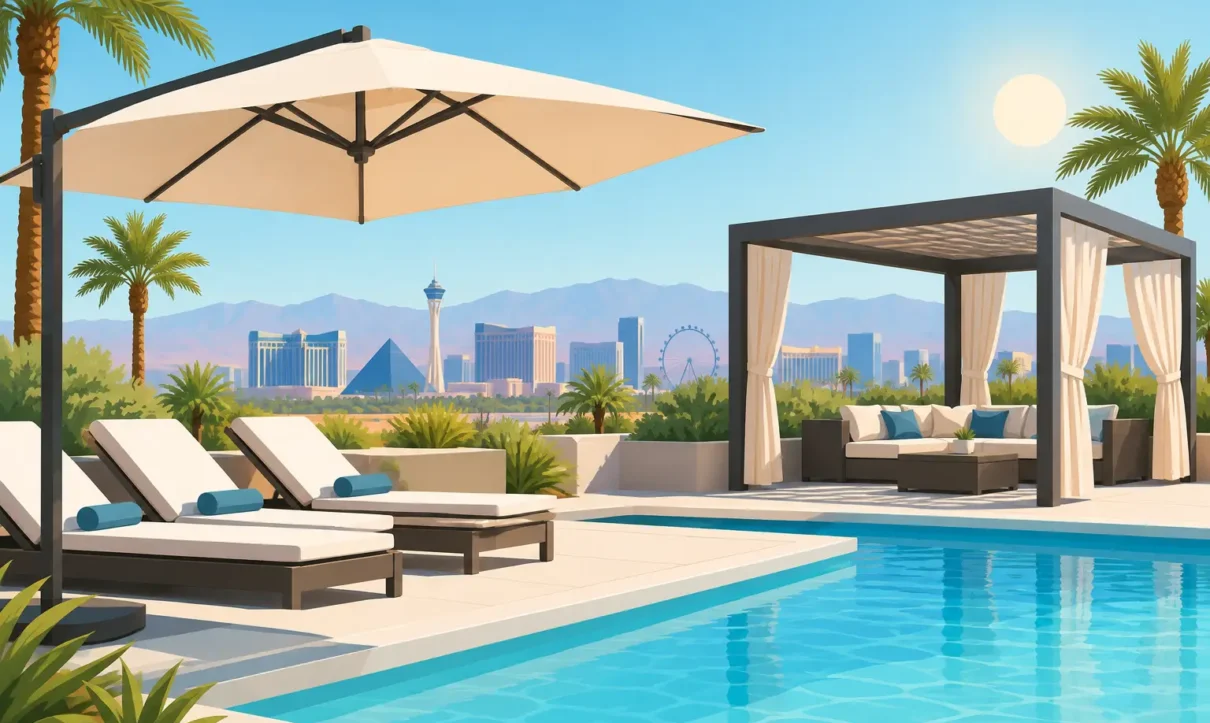
Cantilever umbrellas are popular because the pole sits to the side rather than in the center of a table. The canopy can extend over paired loungers, a conversation set, or a section of shallow water, making it a practical solution where conventional umbrellas would be awkward.
Quality matters here. A large canopy catches wind, and Las Vegas weather can change quickly. Look for a substantial base, durable frame, UV-resistant fabric, and an easy method for closing and securing the umbrella when it is not in use. A less expensive umbrella may be appropriate for occasional use, but it should not be treated as permanent architecture.
Shade sails
Shade sails create a crisp, contemporary look and can cover irregular areas where a rectangular patio cover would feel too heavy. A well-designed sail system can stretch above loungers, a play area, or a side yard passage, adding visual movement while reducing sun exposure.
Their success depends on engineering and tension. Sails need properly placed posts or structural attachment points, adequate height for drainage, and a plan for wind loads. Fabric selection also affects the result. Some materials provide excellent UV filtering while still allowing airflow; others offer denser coverage but can make the area below feel more enclosed. For a pool setting, consider how the sail shape will affect views, water features, and access for maintenance.
Poolside umbrellas and daybeds
Center-pole umbrellas remain useful around dining tables and smaller seating groups, particularly when the base can be integrated into the deck or furniture. They are affordable, easy to reposition, and available in colors that complement tile, coping, and outdoor furnishings.
Covered daybeds offer a different kind of shade experience. They are less about covering a broad deck area and more about creating a private place to read, nap, or relax after a swim. They work best as an accent within a larger shade plan, not as the only refuge from the sun.
Plan Shade Around How the Backyard Lives
The most successful pool environments use multiple layers of shade. A covered patio may protect dining and cooking, a pavilion may anchor the poolside lounge, and umbrellas may follow the sun around individual chaise lounges. This approach keeps the yard flexible without covering every square foot.
Start by identifying when each zone is used. Morning sun may be welcome near a breakfast patio but uncomfortable on a west-facing deck late in the day. Consider where family members enter and exit the pool, where guests gather, and where children need clear supervision. Shade should improve those experiences, not create blind corners or crowded walkways.
It is also wise to think beyond sun protection. Ceiling fans can make a covered area substantially more comfortable, while integrated lighting keeps the space useful after sunset. If the project includes an outdoor kitchen, plan the hood, ventilation, utilities, and roof clearance together. If a shade structure sits near a fire feature, materials and placement must account for heat and local requirements.
Materials Matter in the Desert
Heat, ultraviolet exposure, dust, and monsoon winds put outdoor structures to work. Aluminum and steel can provide clean lines and low maintenance when properly finished. Wood brings warmth and character but needs a finish and upkeep plan suited to dry, intense conditions. High-quality composite materials can offer another low-maintenance option, depending on the design.
Fabric deserves equal attention. Outdoor-rated textiles should resist fading, mildew, and UV degradation, but even premium fabric will eventually need care or replacement. Lighter colors reflect heat well, while darker colors may create a more dramatic look but can feel warmer below. The best selection often comes down to the structure’s orientation and the amount of afternoon exposure it receives.
Drainage is another detail that is easy to overlook. Solid roofs and louvered systems need a clear strategy for moving water away from the pool deck, house foundation, and seating areas. Good construction is not just about the finished appearance. It is about ensuring the structure performs reliably in changing weather.
Design Shade as Part of the Whole Retreat
A pool renovation is an ideal time to reconsider a backyard’s shade. An outdated patio cover, undersized deck, or disconnected seating area can be redesigned alongside new coping, water features, landscaping, and lighting. Seeing these elements together in a professional 3D design helps homeowners evaluate sightlines, coverage, material combinations, and the scale of a structure before construction begins.
With more than 30 years serving the Las Vegas Valley, Laguna Pool and Spa approaches shade as part of a unified outdoor-living environment, not a separate accessory. A coordinated design can make a compact yard feel more functional or give a larger property the comfort and finish of a private resort.
The right shade feature should make you want to stay outside longer, whether that means a quiet hour beside the spa or a full patio of guests on a summer evening. Begin with how you want the backyard to feel, then build the structure that makes that experience possible.