 By
A pool deck has to do more than frame the water. In Las Vegas, it must stay as comfortable as possible under intense sun, handle splash zones safely, and visually connect the pool to the rest of the backyard. The best pool decking materials balance heat performance, traction, maintenance, budget, and the architectural character of your home.
A beautiful material can still be the wrong choice if it becomes painfully hot in July, stains easily around an outdoor kitchen, or does not work with the grade and drainage of the yard. That is why pool decking should be selected as part of the complete outdoor-living plan, not as a finish chosen at the end of construction.
What Las Vegas Pool Decks Need to Handle
The Las Vegas Valley presents a distinct set of design conditions. Summer heat can make dark or dense surfaces uncomfortable under bare feet, while pool water, sunscreen, grilling, and regular entertaining put finishes to work. Occasional heavy rain also makes positive drainage essential. Water should move away from the pool and home without creating low spots or slick areas.
The ideal deck also matches how the backyard will be used. A family pool with a large shallow area needs generous nonslip walkways and durable surfaces that stand up to constant traffic. A resort-style retreat with a spa, fire feature, and covered patio may prioritize a refined material palette and carefully planned transitions between spaces.
Best Pool Decking Materials for Desert Backyards
Travertine: A Classic Choice for Cooler Comfort
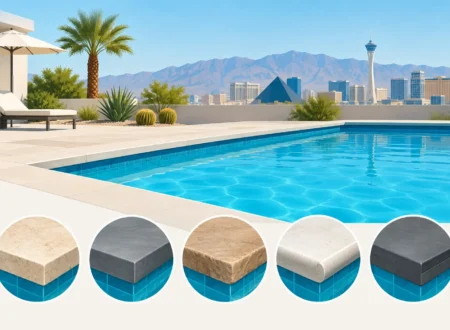
Travertine remains one of the most requested pool-deck materials in Southern Nevada, and for good reason. Its natural texture, light color range, and ability to stay relatively comfortable in direct sun make it particularly suited to the desert climate. Tumbled travertine has a relaxed, elegant character that works with both Mediterranean-inspired homes and clean contemporary pools.
Because travertine is naturally porous, it can help water move through the surface rather than puddle on top. That quality can improve comfort around a pool, although proper base preparation and drainage still determine long-term performance. Sealing may help protect the stone from staining, especially near an outdoor kitchen or dining area.
The trade-off is cost. Natural stone is typically a premium investment, and color variation is part of its appeal. Homeowners who want a highly uniform appearance may prefer a manufactured option. Still, for a high-end custom pool environment, travertine brings genuine depth and a timeless finish that is difficult to duplicate.
Concrete Pavers: Flexible, Durable, and Design-Friendly
Concrete pavers offer a wide selection of colors, shapes, sizes, and laying patterns. They can complement a modern geometric pool, create a traditional patio layout, or introduce visual movement around freeform water features. Light-toned pavers are generally a smarter choice in Las Vegas because they reflect more heat than darker colors.
One of the practical advantages of pavers is repairability. If a section settles or a utility line requires access, individual units can be lifted and reset instead of replacing an entire slab. Pavers also allow designers to create distinct zones, such as a dining terrace, fire-pit seating area, or path to a detached spa, while keeping the backyard cohesive.
Their performance depends heavily on installation. A properly compacted base, edge restraint, joint material, and drainage plan are not optional details. They are what keep pavers stable and attractive through years of use. For homeowners who want extensive hardscape with a tailored look, pavers provide exceptional design flexibility.
Porcelain Pavers: Contemporary Style With Low Absorption
Porcelain pavers have become a strong option for homeowners seeking a crisp, modern backyard. Available in large formats and finishes that resemble natural stone, concrete, or wood, porcelain can create a polished architectural effect around a pool. It is dense, color-stable, and highly resistant to moisture absorption, staining, and fading.
For pool applications, the selected product must have an appropriate textured, slip-resistant surface. Smooth indoor-style tile is not the right material for a wet deck. A professional design team can specify a pool-rated porcelain product and coordinate coping, stair details, and transitions so the finished space looks intentional rather than pieced together.
Porcelain can feel hotter than travertine depending on the color, finish, and sun exposure. It also requires exact installation because its large, rigid pieces offer little room for error. When paired with shaded areas, a light palette, and a well-planned pool layout, it is an excellent choice for a contemporary outdoor retreat.
Poured Concrete: Versatile and Budget-Conscious
Poured concrete remains one of the most versatile decking systems. It can be finished as broomed concrete for dependable traction, colored for warmth, stamped for texture, or enhanced with exposed aggregate. For a renovation, concrete may also be an effective way to expand a limited deck footprint or create a clean new surface around an existing pool.
A light-colored, textured concrete deck can provide a practical balance of affordability, durability, and visual appeal. It works particularly well for broad patios and integrated outdoor-living spaces where a continuous surface is preferred. Decorative scoring or saw cuts can add structure without the cost of individual pavers.
The limitation is cracking. Concrete naturally moves, and even a well-built slab needs properly placed control joints and a stable subgrade. Repairs can be more noticeable than they are with pavers. Heat is also a consideration, particularly with darker integral colors or dense finishes. A quality coating or specialized cool-deck finish may improve comfort, but it should be selected for the specific surface and expected use.
Natural Flagstone: Organic Character for Select Areas
Flagstone gives a backyard an organic, custom-built feel. Its irregular edges and natural variation fit especially well around rock waterfalls, lush landscape designs, and freeform pools. It can be a compelling material for accent patios, stepping paths, raised spa surrounds, and fire-feature seating areas.
Not every flagstone is equally suitable for every pool deck. Surface texture, stone density, grout joints, and the chosen color all affect comfort and maintenance. Some stones can become hot or slick when wet, while wider joints may collect debris. For that reason, flagstone often performs best as part of a mixed-material plan rather than covering every square foot around the pool.
Choose the Surface and the Layout Together
Deck material is only half of the decision. Pool coping, waterline tile, landscape walls, patio covers, and outdoor-kitchen finishes should all support the same design direction. A light travertine deck may pair beautifully with a raised spa and soft-toned stone veneer. Large-format porcelain may be the better match for a linear pool, fire bowls, and a minimalist patio cover.
Deck size matters as much as the finish. Plan room for lounge chairs, circulation around the pool, grilling, dining, and safe access to spa steps or a beach entry. A deck that looks generous on a plan can feel crowded once furniture arrives. Professional 3D design helps homeowners see these relationships before construction begins and make decisions with greater confidence.
Safety, Drainage, and Maintenance Matter
No material eliminates maintenance, but some demand less of it. Porcelain is particularly low absorption, while natural stone often benefits from periodic sealing. Paver joints may need occasional attention, and concrete surfaces may eventually need cleaning, resealing, or coating renewal. The best choice is the one whose maintenance needs align with how you intend to use the space.
Safety should guide every selection. Favor light, textured, pool-rated finishes; avoid polished surfaces in wet areas; and make sure the deck is pitched correctly. Drainage details around coping, deck drains, planters, and patio covers protect both the finished look and the long-term condition of the backyard.
At Laguna Pool and Spa, more than 30 years of Las Vegas Valley construction experience informs these decisions from the start, bringing pool design, hardscape, landscape, and outdoor features into one coordinated plan.
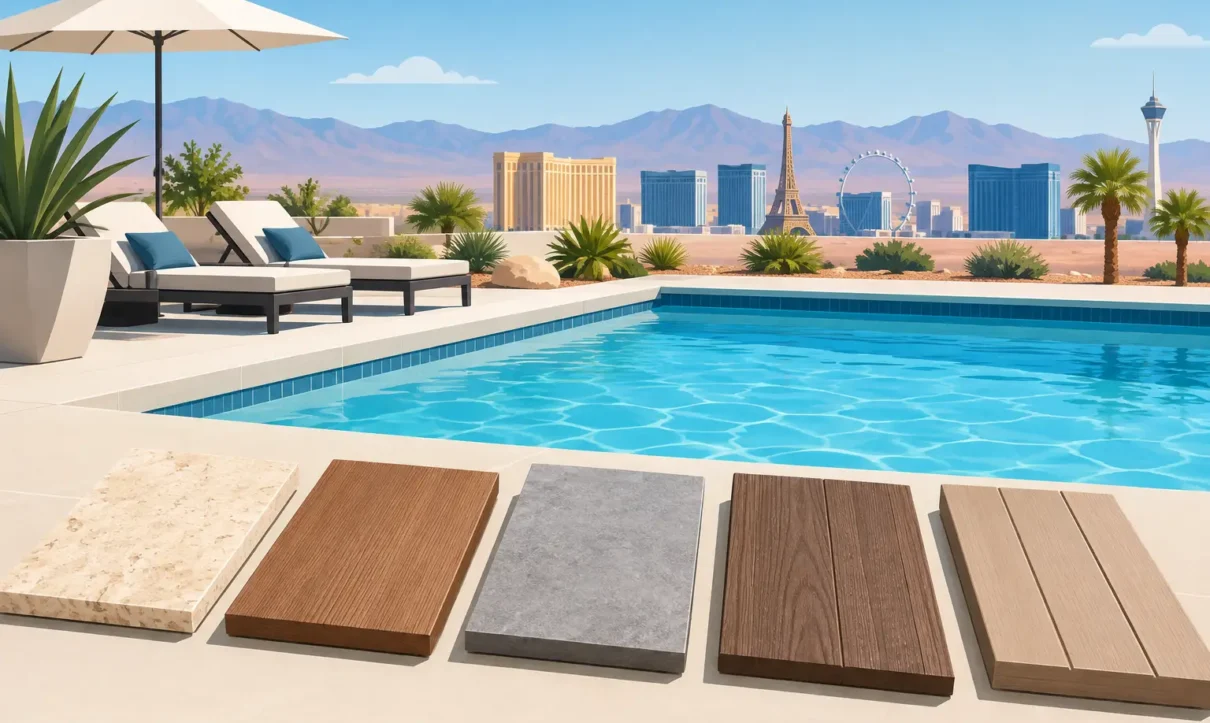
A pool deck should invite people to stay outside longer, from the first morning swim to an evening gathered around the fire feature. Bring inspiration photos, a realistic idea of how you entertain, and your maintenance preferences to a professional design consultation. The right material is not simply the one that looks best on a sample board. It is the one that makes your complete backyard retreat more comfortable, safer, and more enjoyable for years to come.