
 By
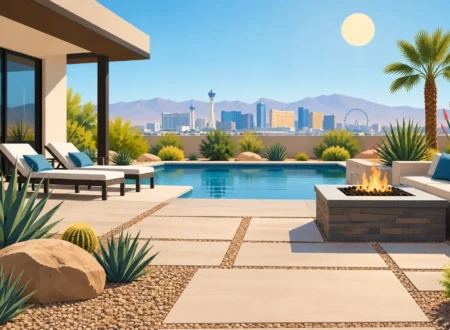
By A well-designed infinity edge pool does more than create a dramatic line of water. It changes the way a Las Vegas backyard feels, drawing the eye toward a mountain view, golf course, city lights, or an open desert horizon. When the edge, elevation, and surrounding hardscape are planned as one composition, the result can feel like a private resort built specifically for your home.
For homeowners considering a major backyard transformation, this feature deserves more than a simple add-on decision. An infinity edge is a structural and visual commitment. It needs the right site conditions, thoughtful engineering, and a design team that understands how water, grade changes, finishes, landscaping, and outdoor living areas work together.
What Makes an Infinity Edge Pool Different?
An infinity edge pool, also called a vanishing-edge or negative-edge pool, is designed so water flows over one or more exposed sides into a lower catch basin. From the main viewing angle, the pool surface appears to meet the horizon without a visible wall or coping line stopping the view.
The effect is created by a carefully leveled overflow edge and a concealed collection system below it. Water enters the catch basin, then returns to the pool through dedicated plumbing and equipment. This is very different from a conventional pool, where the waterline stays below a visible perimeter edge.
The visual result is striking, but the value of the feature comes from placement. On a lot with a meaningful view or a natural grade change, a negative edge can make the property feel more expansive. In a level yard with close neighboring homes, the same feature may still be beautiful, but it often needs a stronger architectural focal point – such as a raised spa, fire feature, statement wall, or layered landscaping – to justify the investment.
The Best Settings for an Infinity Edge Pool
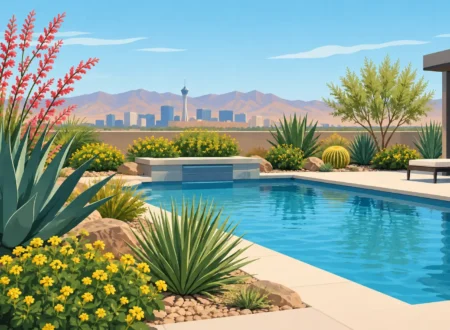
Las Vegas Valley properties offer many opportunities for vanishing-edge designs, especially in communities with elevated lots, view corridors, and sloped terrain. A backyard overlooking the Strip, Red Rock Canyon, a fairway, or the surrounding mountains can be an excellent candidate because the disappearing waterline directs attention outward.
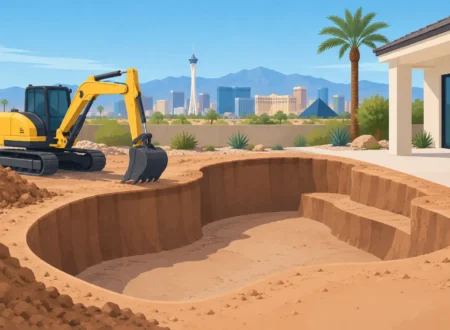
A sloped lot can also help the design work naturally. The lower elevation creates space for the catch basin and can support a stepped outdoor environment with retaining walls, patios, planting areas, and a lower-level lounge. That does not mean a hillside pool is automatically simple. Soil conditions, drainage, access, structural support, and local requirements all need to be evaluated before construction begins.
Flat yards can support an infinity edge pool as well. In these settings, the design may use a raised edge wall, an elevated pool profile, or a contained view toward an outdoor kitchen, cabana, or feature wall. The key is to avoid installing an edge merely because it is popular. The best design gives the water a purposeful direction and gives homeowners a memorable place to enjoy it.
Views, privacy, and the main viewing angle
The effect of an infinity edge is strongest from the spaces where people will actually spend time. That may be the home’s main living room, a covered patio, a primary-suite balcony, or the poolside seating area. During professional design, the edge should be evaluated from those sightlines rather than viewed only from a plan drawing.
Privacy matters too. If the edge faces nearby two-story homes, strategic walls, mature-looking landscape material, and architectural screening can protect the setting without closing off the backyard. The goal is to frame the view while making the space feel comfortably private.
Engineering Is Part of the Experience
The clean, calm look of a vanishing edge depends on technical precision. The overflow must be level, the catch basin must be correctly sized, and the circulation system must be designed to move water reliably under real operating conditions. Wind, bather load, evaporation, and the volume displaced by a spa spillway can all affect the water level and collection capacity.
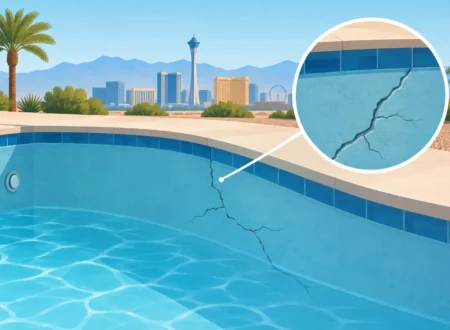
A negative-edge pool also requires careful structural planning. The exposed edge wall must withstand water pressure and the conditions created by the site. On an elevated or sloped property, the pool shell, retaining structures, drainage paths, and soils engineering deserve special attention. Cutting corners below the surface can lead to expensive problems long after the tile and water features are complete.
Equipment planning is equally important. The additional basin and circulation requirements can mean more pumps, valves, automation components, and service access than a standard pool. Today’s variable-speed equipment and smart controls can make operation more efficient and convenient, but homeowners should understand that an infinity edge typically has more moving parts and a higher operating commitment than a conventional pool.
Designing the Edge as Part of a Complete Retreat
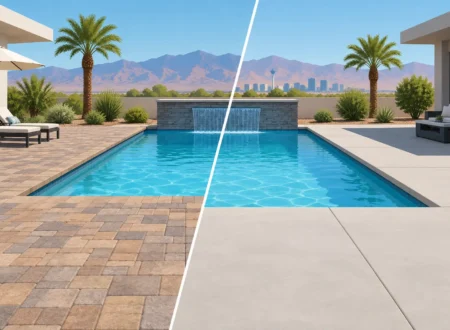
The waterline is only one element of the finished environment. The most successful projects coordinate the pool with the home’s architecture and the way the family plans to use the yard. A contemporary home may call for large-format porcelain decking, crisp linear tile, and a minimal edge profile. A warmer desert-inspired setting may use natural stone, textured materials, softer planting, and layered firelight.
An integrated spa is a natural companion to an infinity edge pool. It can be positioned to share the same view, raised to create a gentle spillway, or tucked into a protected corner for more intimate use. Baja shelves and wet decks add a place to cool off without fully swimming, while tanning ledges can become a favorite spot for children and adults alike.
At night, lighting gives the edge a different personality. Underwater LEDs can emphasize the pool’s geometry, while low-voltage landscape lighting adds depth around pathways, palms, specimen plants, and seating walls. The reflection of city lights or a fire feature across the water can be as compelling after sunset as the view is during the day.
Materials that hold up in the desert
Las Vegas heat, sun exposure, and hard water make finish selection practical as well as aesthetic. Deck materials should be chosen for heat comfort, slip resistance, durability, and maintenance expectations. Pool tile needs to complement the water color while standing up to regular chemical exposure and mineral buildup.
Interior finishes influence how the water reads in different light. Lighter tones can create a brighter, more reflective appearance, while deeper finishes often produce richer blue water and stronger contrast at the vanishing line. Samples and 3D visualization are helpful because a material that looks excellent indoors can appear very different under intense desert sunlight.
Budget and Maintenance Considerations
An infinity edge pool generally costs more than a conventional pool of similar size because it includes added structure, plumbing, equipment, waterproofing, tile work, and a catch basin. The price difference depends on the site, edge length, elevation change, access, selected materials, and whether the project includes extensive hardscape, landscaping, or outdoor living construction.
Maintenance is manageable, but it is not identical to caring for a standard pool. The catch basin needs to be kept clear, water chemistry needs consistent attention, and the circulation equipment should be inspected and serviced on schedule. Evaporation is a real consideration in the Las Vegas climate, especially during hot and windy periods. Proper automation, water-level controls, and professional startup procedures help make day-to-day ownership easier.
For some homeowners, a perimeter-overflow pool may be worth considering instead. It creates a mirror-like, high-end water surface around multiple sides of the pool, but it carries its own engineering and cost requirements. Others may prefer a cascading spillway or raised water feature that delivers movement and sound without the investment of a true negative edge. The right answer depends on the lot and the experience you want from the space.
Start With a Design That Tests the View
Before choosing tile or finalizing a pool shape, establish what the infinity edge will frame. A professional site evaluation can identify grade changes, utilities, drainage needs, access constraints, and the strongest visual opportunities. From there, a 3D design can show how the pool will relate to the home, patio cover, outdoor kitchen, spa, fire features, and landscape before construction starts.
With more than 30 years of experience in the Las Vegas Valley, Laguna Pool and Spa approaches these projects as complete outdoor environments rather than isolated pool installations. That design-led process helps homeowners make clear decisions about scale, materials, and budget while the project is still on paper.
The best infinity edge pool is not simply the one with the most dramatic photograph. It is the one that fits the property, works reliably through desert seasons, and gives your family a reason to spend more evenings outside. Start by looking from your favorite room toward the backyard – the right edge may already be waiting in that view.