 By
By A spa can look like a simple raised feature beside a pool, but in a Las Vegas backyard, it needs to do far more. It must hold heat efficiently through cool desert evenings, complement the architecture of the home, operate reliably, and feel like it was always part of the property. The right spa builders bring those details together before the first piece of equipment is installed.
For homeowners planning a new pool or updating an older outdoor space, a custom spa adds a different kind of value. It creates a place to decompress after a long day, extends the use of the backyard beyond swim season, and gives the entire setting a more finished, resort-inspired character. The result depends less on choosing a spa shell and more on the planning, engineering, materials, and construction expertise behind it.
What Experienced Spa Builders Consider First
The best spa location is rarely an afterthought. A spa should be positioned around how the backyard will actually be used – whether that means a quiet retreat near the primary bedroom, a social gathering point beside an outdoor kitchen, or a raised focal point that spills elegantly into the pool.
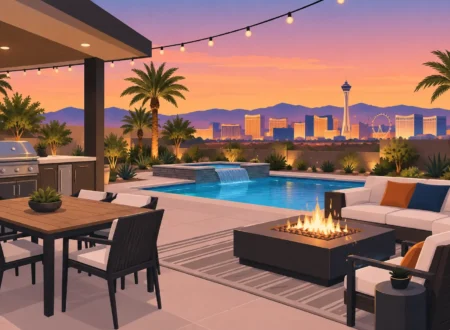
Privacy, views, sun exposure, wind, and the route from the house all matter. In the Las Vegas Valley, orientation can influence comfort more than homeowners expect. An exposed spa may be beautiful in a 3D plan but less enjoyable if prevailing wind makes winter evenings uncomfortable. Strategic walls, landscaping, patio covers, and fire features can help create a more protected experience without closing off the yard.
Spa builders also need to evaluate the practical constraints of the site. Existing utilities, drainage, access for construction equipment, elevation changes, setbacks, and the condition of any existing pool structure can affect the design approach. Addressing these factors early prevents a beautiful concept from becoming an expensive change order later.
A Custom Spa Should Belong to the Entire Backyard
A spa works best when it is designed as part of a complete outdoor environment. It should connect visually and functionally with the pool, decking, landscape, lighting, and entertainment areas rather than feel like a separate addition.
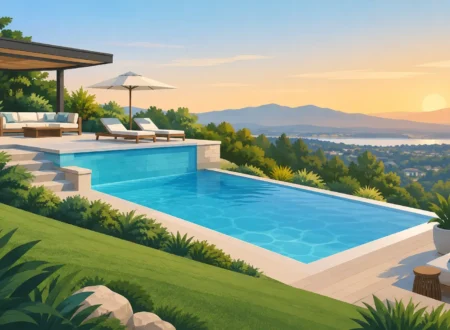
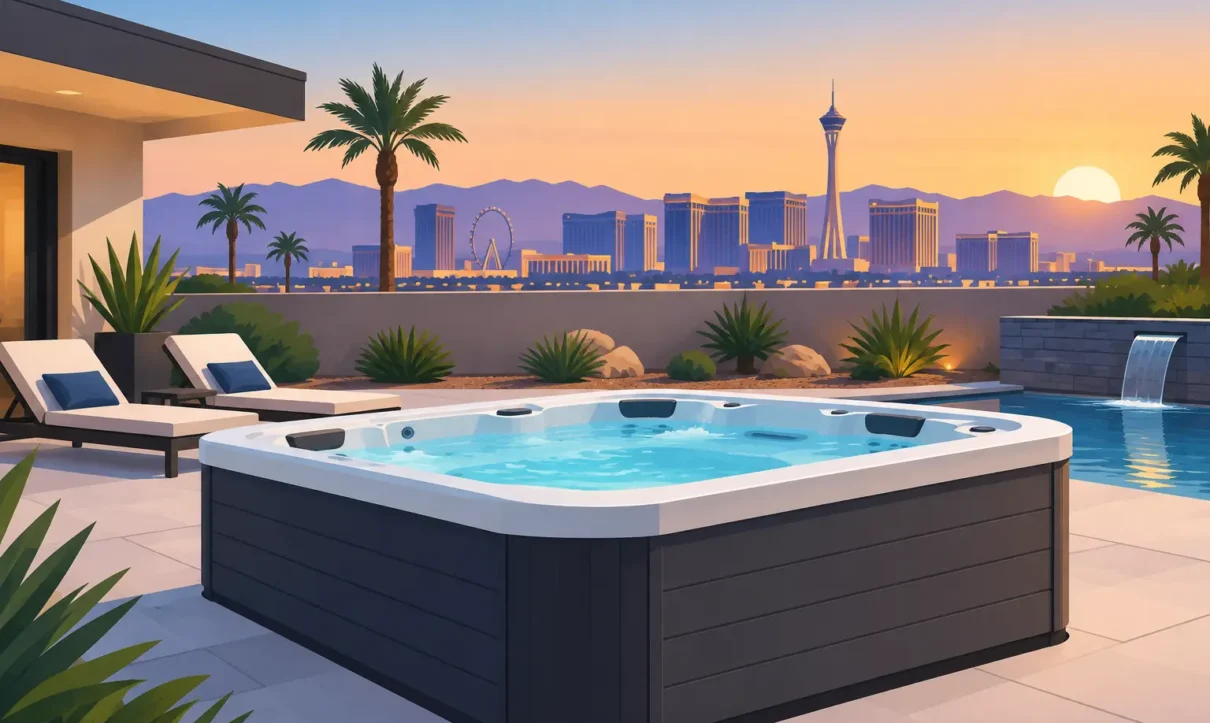
For a new construction project, this can mean carrying the pool’s waterline tile into the spa, repeating stone selections at the outdoor kitchen, or using matching deck materials to create a unified layout. A raised spa with a cascading spillway can provide movement and sound while creating a natural visual centerpiece. For homeowners who prefer a cleaner, more contemporary look, a flush spa with a subtle perimeter overflow may be a better fit.
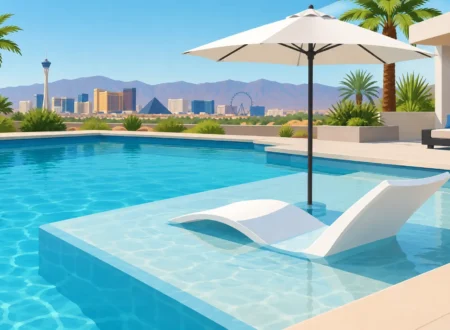
There is no single right configuration. Raised spas create strong visual definition and can offer convenient seating along the edge, but they may require more prominent steps or retaining details. Flush spas can feel more integrated and open, though the design must still clearly define the water’s edge and provide safe, comfortable access. The choice depends on the home’s architecture, the backyard’s grade, and the lifestyle the space is meant to support.
Size Is About Seating, Not Just Square Footage
A compact spa can be an excellent choice for two people looking for a private place to relax. A larger design may make more sense for families, frequent entertainers, or homeowners who want the spa to be a central gathering space.
The number and placement of seats matter as much as the overall dimensions. Good spa design accounts for varied body sizes, comfortable entry and exit, jet placement, footwell room, and enough personal space that guests do not feel crowded. Deep bucket seats may appeal to some homeowners, while others prefer a combination of upright seating and a cooler bench or shallow lounging area.
A professional design consultation helps turn broad preferences into practical decisions. Seeing the spa alongside the pool, patio furniture, fire features, and landscaping in a detailed 3D model gives homeowners a clearer sense of scale before construction begins.
Engineering Is What Makes a Spa Comfortable to Own
The visual side of a custom spa earns attention, but its mechanical design determines how it feels day after day. Water circulation, heating capacity, plumbing layout, filtration, automation, and jet performance all need to work as one system.
A spa connected to a pool commonly shares equipment, but that does not mean the system should be treated as an afterthought. Proper valve placement allows the spa to heat efficiently when it is in use. Correctly sized lines and thoughtfully placed returns help maintain circulation. Jets need enough hydraulic performance to provide a satisfying massage experience rather than a weak stream of water.
Homeowners should also discuss the operating experience. Automation can allow users to activate the heater, lights, water features, and spa mode from a wall control or mobile device. This is particularly useful in Las Vegas, where a spa might sit unused during a hot afternoon and be ready for a relaxing evening within a planned heating window. Equipment selections should balance convenience, energy use, long-term serviceability, and the complexity appropriate for the project.
Safety and Access Deserve Equal Attention
A custom spa should invite relaxation without creating unnecessary risks. Slip-resistant decking, properly designed steps, handholds where appropriate, clear water-depth transitions, and code-compliant electrical work are foundational parts of the build.
Families with young children may prioritize visibility from the home, safety barriers, and a layout that keeps the spa area easy to supervise. Homeowners planning to age in place may want wider access paths, fewer abrupt level changes, and seating that is easier to enter and exit. These choices do not have to compromise the finished design. They simply need to be incorporated before the project reaches the construction phase.
Questions to Ask Before Hiring Spa Builders
The contractor you choose will influence not only the look of the spa but also the predictability of the entire project. A qualified builder should be prepared to discuss design, permits, equipment, scheduling, and construction methods in clear terms.
Ask whether the company is licensed, bonded, and insured for the work being performed. Ask who will manage the job, how design changes are documented, and whether the builder coordinates the associated trades for hardscape, electrical, landscaping, and outdoor features. A single design-build team can simplify accountability, particularly when the spa is part of a larger backyard transformation.
It is also reasonable to ask how the builder handles existing conditions. Pool renovations may reveal aging plumbing, structural issues, inadequate drainage, or decking that no longer meets the needs of the new plan. An experienced contractor will not promise that every renovation is simple. Instead, they will explain likely conditions, investigate where needed, and develop a scope that reflects the real work involved.
Review completed projects for more than surface style. Look at the relationship between water, decking, elevation, and the home. Notice whether transitions appear intentional and whether features feel proportioned to the space. A portfolio should demonstrate versatility, because a compact courtyard spa and a large resort-style poolscape require different design instincts.
Building for Las Vegas Conditions
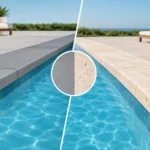
Desert construction experience matters. Las Vegas heat, intense sun, hard water considerations, and significant temperature shifts place real demands on finishes and equipment. Material selections should be made for more than appearance. The right tile, coping, decking, and landscape materials need to stand up to the local climate while remaining comfortable and manageable to maintain.
Shade can transform how often a spa and surrounding patio are used. A patio cover, pergola, strategically placed trees, or architectural shade structure can make the transition from house to water more comfortable. Lighting is equally valuable. Layered lighting at steps, paths, landscaping, water features, and seating areas makes the backyard safer while giving it a welcoming evening atmosphere.
For more than 30 years, Laguna Pool and Spa has helped Las Vegas Valley homeowners plan outdoor environments where custom spas, pools, hardscape, and lifestyle features are designed to work together. That coordinated approach is especially valuable when the goal is not simply to add water, but to create a backyard people want to use every day.
From Concept to a Backyard You Will Use More Often
A well-built spa does not need to be oversized or loaded with every available feature to feel exceptional. It needs to fit the people who will use it, the home it serves, and the rhythm of the backyard. Sometimes that means a compact spa with exceptional seating and privacy. Other times, it means a dramatic raised structure, spillways, fire elements, and generous entertainment space.
The strongest projects begin with an honest conversation about priorities, budget, and how the outdoor space should feel when the work is complete. Start there, then let a professional design plan turn that vision into a place that makes an ordinary Las Vegas evening feel like time away.