 By
You have signed off on a design, the 3D renderings look right, and the paperwork is moving. So what actually happens between that moment and the first time you step into the water? Pool installation in Las Vegas follows a clear sequence, and knowing each stage helps you plan around the work, keep your household running and ask better questions along the way. Here is how a custom gunite pool goes from approved plan to first swim.
Before Ground Breaks: Final Plans and Approvals
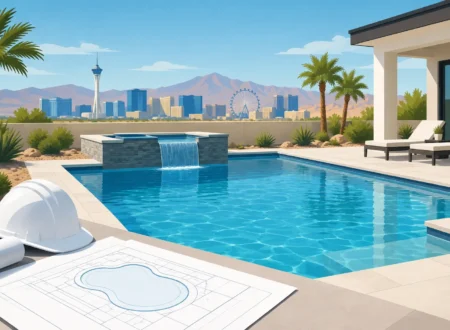
The design you approved becomes a set of construction plans. Those plans show the pool’s exact shape, depths, steps, benches, spa location, equipment pad and the routes for plumbing, electrical and gas lines. They are what the city or county reviews for a permit, and if you live in a community with an HOA, they are usually what the association reviews as well.
This is also the moment to confirm the details that are hard to change later: where the equipment will sit, whether you want a heater or automation now or later, and where future features such as an outdoor kitchen or fire feature might connect. A good builder will walk you through these choices before anything is staked out. You can read more about how Laguna handles this stage on our design process page.
Layout and Excavation
Once permits are in hand, the crew paints the pool outline on the ground and checks it against the plans, setbacks and utility markings. Many homeowners find this is the first time the size of the pool really sinks in, so it is a good time to walk the yard and look at the layout from inside the house.
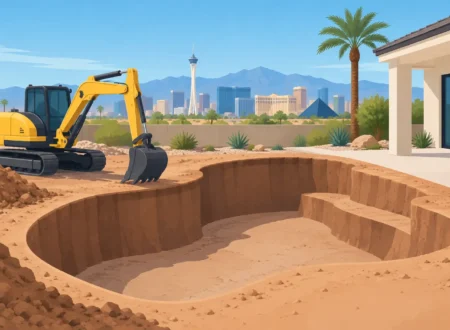
Then the excavation crew digs the shape and depths. In the Las Vegas Valley, crews often run into caliche, a cemented layer of soil that can be very hard to dig through, and sometimes rock. Access matters here too: equipment needs a path into the backyard, and soil has to be hauled away. Your builder should tell you ahead of time which gate, fence section or side yard will be used and how landscaping near that path will be protected.
Steel, Plumbing and Electrical Rough-In
With the hole dug, the crew sets a grid of steel reinforcing bar (rebar) that follows every curve, step and bench. This steel gives the pool shell its strength. At the same time, plumbing lines for returns, skimmers, main drains, spa jets and water features are run to the equipment pad, and electrical conduit is laid for lights, pumps and any automation.
Inspections usually happen at this point, before anything gets covered up. It is one of the most important checkpoints in the whole process, because the steel and plumbing will soon be locked inside concrete.
Shooting the Gunite Shell
Gunite is a dry concrete mix that is sprayed through a hose at high pressure, with water added at the nozzle. The crew builds up the floor, walls, steps, benches and spa in place, then shapes and trims the surface by hand. This is the day the pool goes from a hole full of steel to something that looks like a pool.
After it is shot, the shell needs time to cure. In our dry desert climate, the shell is typically watered down during this period to help it cure properly. Your builder will let you know whether that is something you need to help with.
Tile, Coping and Decking
Next comes the finish work around the edges. Waterline tile is set along the top of the pool walls, where it protects the shell and makes calcium and scale easier to clean off. Coping, the cap along the pool’s edge, is installed in stone, pavers or poured concrete. Then the deck goes in around the pool.
These are the materials you will see and touch every day, so it pays to look at real samples before you choose. The Laguna showroom has waterline and accent tile, stone, pavers, concrete and quartz finishes on display, along with a fully operating pool and spa.
Equipment Set and Final Connections
While the deck work is under way, the equipment pad comes together. The pump, filter, heater (if you chose one), sanitation system and controls are installed and connected to the plumbing and electrical lines that were roughed in earlier. Gas lines for a heater or fire features are completed, and lighting is wired. A final round of inspections typically covers electrical, safety barriers and other items your jurisdiction requires.
Interior Finish and First Fill
The interior finish, such as quartz or pebble, is applied last, after the dirtiest work is done. Once it goes on, filling begins right away and should not be interrupted. You will usually be asked to keep the hose running until the water reaches the middle of the tile line.
A new finish needs careful attention in its early life. Water chemistry is balanced and brushed in stages during the start-up period, which helps the finish cure evenly and avoid staining or roughness. Hard Las Vegas water makes this step especially important.
Start-Up, Orientation and First Swim
When the water is balanced and the equipment is running, you should get a walkthrough of how everything works: how to run the pump and filter, how to use the controls or app, how to clean the filter, and what routine care looks like. Ask questions here. Knowing your system on day one saves a lot of guesswork later.
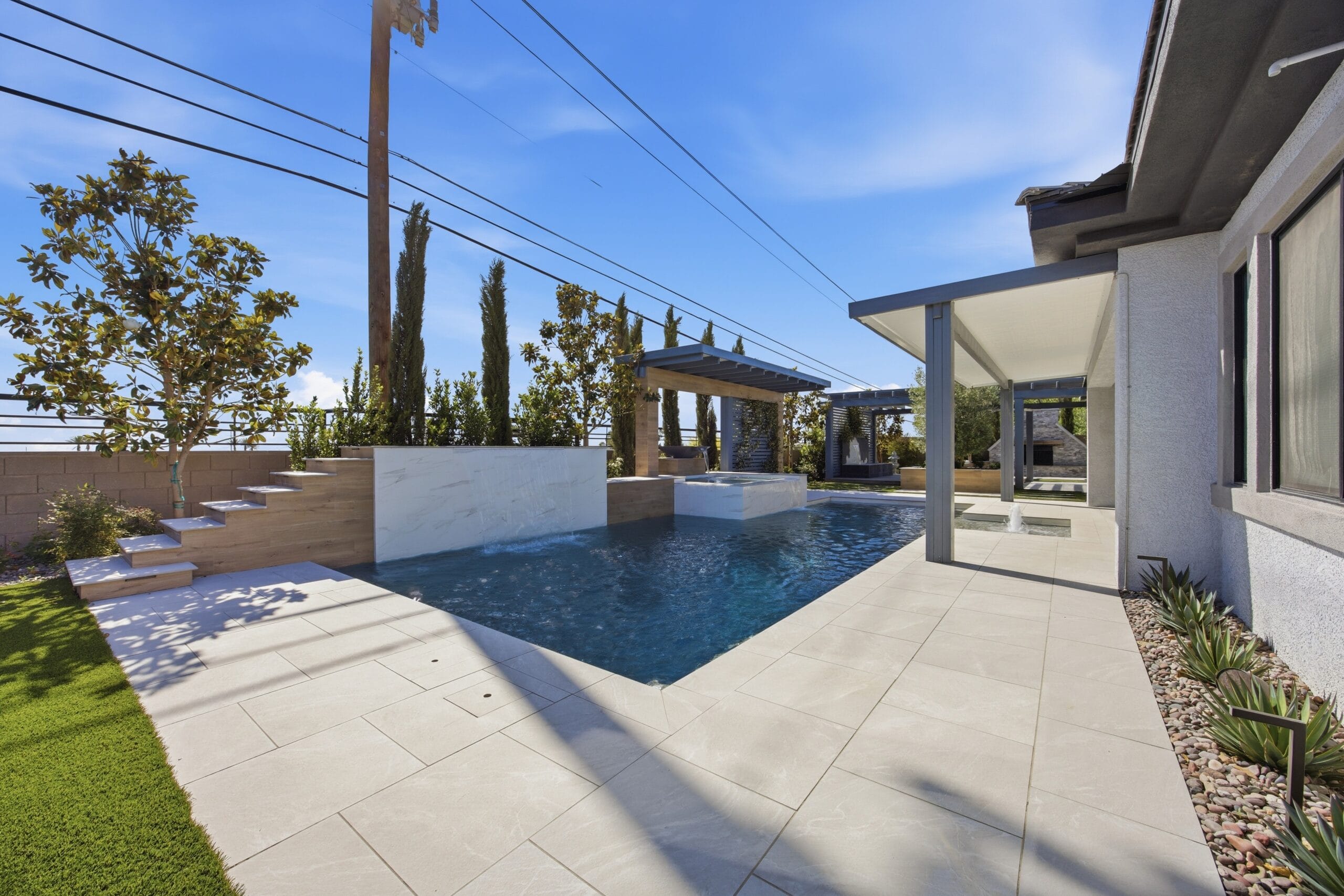
Then comes the part you have been waiting for. Once your builder confirms the chemistry and finish are ready, the pool is yours to enjoy.
Making Pool Installation in Las Vegas Go Smoothly
- Plan for access. Clear the work path, move vehicles and let neighbors know heavy equipment will be coming.
- Protect pets and kids. An open excavation is a hazard. Keep the work area off limits and secure gates at the end of each day.
- Think about irrigation and sprinklers. Lines near the pool area may need to be capped or rerouted.
- Keep one point of contact. Know who to call with questions and how you will get updates as each phase begins.
- Decide on future phases now. Even if the kitchen or landscaping comes later, stubbing out gas, water or electrical during construction avoids tearing things up down the road.
Why the Builder’s Crews Matter
Each stage depends on the one before it. When different companies handle excavation, steel, plumbing, tile and finish, scheduling gaps and miscommunication can creep in. Laguna Pool & Spa has built pools in the Las Vegas Valley since 1991 and uses specialized in-house crews for each construction phase, with limited use of subcontractors. That keeps each step accountable to the same team that designed your backyard. You can see how we break down the work on our pool construction process page.
Ready to plan your backyard? Call Laguna Pool & Spa at (702) 656-3608 for a free design consultation, or schedule an appointment to visit our Las Vegas showroom and see a working pool and spa.