 By
By A swimming pool in the Las Vegas Valley is not a short-term backyard purchase. It becomes part of how your family cools off, entertains, relaxes, and uses the property for years to come. Choosing the right Las Vegas pool builder means looking beyond a beautiful pool photo and finding a construction partner with the local experience, design capability, and accountability to build the entire environment well.
The strongest projects begin with a clear idea of how you want to live outside. Maybe that means a clean-lined pool with a raised spa for quiet evenings. Maybe it means a shallow wet deck where children can play, an outdoor kitchen for game-day gatherings, or a complete renovation that gives an aging backyard a more current, intentional feel. The builder should help turn those ideas into a practical plan that fits your home, site, budget, and long-term expectations.
What a Las Vegas Pool Builder Should Understand
Las Vegas pool construction has its own set of considerations. Extreme summer heat, intense sunlight, water use, lot configurations, HOA requirements, drainage, access for equipment, and soil conditions all influence how a project is designed and built. A pool that looks impressive on paper still needs to function efficiently through the Valley’s hottest months and remain comfortable for the people using it.
Local experience matters because it informs the decisions homeowners may not immediately see. Proper equipment selection, plumbing layout, shade planning, deck materials, circulation, and placement of water features can affect maintenance, comfort, energy use, and the finished appearance. A knowledgeable local builder can explain where investing more makes sense and where a simpler choice may deliver better value.
For example, a large glass-tile waterline can create a dramatic finish, but it may not be the first upgrade to prioritize if the project lacks sufficient deck space or shade. An oversized spa may be ideal for homeowners who entertain frequently, while a compact spillover spa can deliver the same visual connection in a smaller yard. Good design is not about adding every available feature. It is about choosing features that work together.
Start With the Whole Backyard, Not Just the Pool
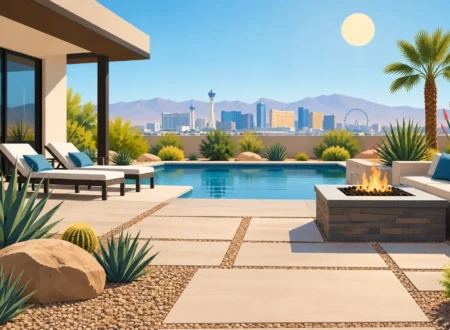
A pool should not feel like an object dropped into the middle of a yard. It should establish the center of a complete outdoor living environment. That is why homeowners benefit from working with a contractor that can coordinate the pool, spa, hardscape, landscape, patio cover, lighting, fire feature, and entertainment areas as one project.
When these elements are planned separately, the result can feel pieced together. A pool might be completed before the homeowner realizes there is not enough room for lounge chairs. An outdoor kitchen may be placed too far from the main seating area. A fire feature can compete with a water feature instead of creating a balanced focal point. Addressing the full backyard early helps avoid costly revisions and preserves a cohesive architectural look.
This approach is especially valuable for renovation projects. An older pool may be structurally sound but visually dated, surrounded by worn decking, limited lighting, or landscaping that no longer suits the home. Renovation can include resurfacing, new tile and coping, updated equipment, a remodeled spa, or a redesigned patio. In other cases, the most meaningful improvement is reimagining the entire space around the pool.
Design for How You Actually Entertain
Before design begins, consider the moments you want your backyard to support. A family that spends afternoons swimming may prioritize a broad shallow area, easy-entry steps, and open deck space. Homeowners who host often may place more value on a swim-up seating area, outdoor kitchen, fire pit, or integrated sound and lighting. Those seeking a private retreat may prefer a spa, cascading spillway, covered lounge zone, and carefully layered landscape lighting.
There is no universal best layout. A beach entry can be inviting and elegant, but it uses more square footage than conventional steps. An infinity edge creates a striking visual effect when a lot has the right sightline, but it adds engineering and maintenance considerations. A wet deck is popular for families and entertaining, though it requires thoughtful placement so it does not crowd circulation around the pool. The best builder will discuss these trade-offs before the plans are finalized.
Ask for a Professional Design Process
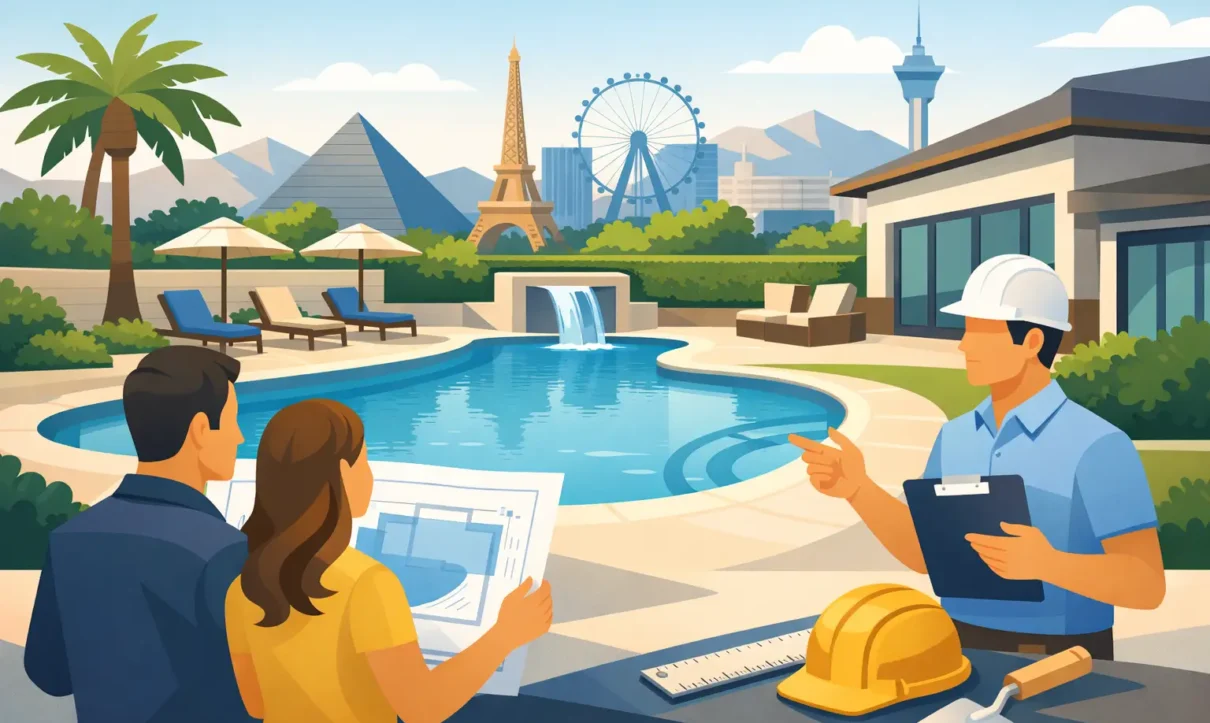
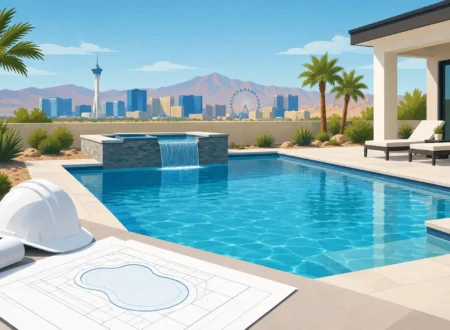
A design-led process gives homeowners more certainty before construction begins. Rather than making major decisions from a sketch or verbal description, ask whether the builder provides professional plans and 3D visualization. Seeing the proposed pool, hardscape, elevations, landscaping, and key features in a realistic format makes it easier to evaluate scale, sightlines, and flow.
3D design is particularly helpful when a project includes several elements. You can see whether a raised spa blocks a preferred view, whether a patio cover creates the right amount of shade, and how a fire feature relates to the pool at night. It also creates a better foundation for conversations about changes. Moving a water feature on a digital plan is much simpler than moving it after excavation has started.
During the design phase, homeowners should expect detailed questions about their property and priorities. How much direct sun does the yard receive? Where are utility lines and access points? Is there a view worth preserving? What is the preferred level of privacy? Are there children, pets, or guests with mobility needs? These are not minor details. They shape the design and help create a backyard that feels natural to use.
Verify Construction Credentials and Project Accountability
A custom pool is a significant construction project involving excavation, structural work, plumbing, electrical systems, equipment, decking, and often multiple additional trades. Homeowners should confirm that a prospective contractor is licensed, bonded, and insured, and should be comfortable asking how permits, inspections, scheduling, and jobsite communication will be managed.
The lowest proposal is not always the lowest final cost. A quote may omit details that become change orders later, use less comprehensive specifications, or leave the homeowner coordinating separate contractors for landscaping, hardscape, or outdoor amenities. Compare proposals based on scope, materials, equipment, design support, warranty information, and the contractor’s responsibility for the finished environment.
It also helps to ask who will be available once construction is underway. Clear communication does not mean every stage happens instantly. Pool construction includes inspections, weather variables, material lead times, and sequencing requirements. It does mean you should understand the process, know what comes next, and have a reliable point of contact when questions arise.
Choose Features That Add Lasting Enjoyment
The most successful backyard upgrades balance visual impact with everyday use. A raised spa with a cascading spillway can serve as an architectural centerpiece while providing a comfortable place to unwind. LED lighting extends the use of the backyard after sunset and improves the atmosphere around walkways, water, and gathering spaces. Energy-efficient equipment can help support more manageable operation over time.
Water features deserve careful consideration. Sheer descents, scuppers, bubblers, and rock waterfalls each create a different look and sound. A feature that feels peaceful in a showroom or on a project tour may be too loud beside a quiet seating area. Likewise, a bold fire feature may be perfect for a large entertaining yard but overpower a compact courtyard. Scale and placement matter as much as the feature itself.
Material selections should also fit the home and the climate. Decking needs to be attractive, durable, and comfortable underfoot. Coping, tile, and finishes should complement the home’s architecture while being selected with maintenance expectations in mind. A builder with an established local portfolio can help homeowners see how different material combinations perform in real Las Vegas backyards.
Build Around a Realistic Budget
A thoughtful budget is not simply a number assigned to the pool shell. It should account for the full scope you want to complete, including demolition if needed, permits, access limitations, decking, landscaping, lighting, equipment, and desired features. Financing can also be worth discussing early, particularly when it allows the project to be completed as one cohesive design rather than in disconnected phases.
Phasing may still make sense in some situations. A homeowner may build the pool, essential hardscape, and equipment first, then add an outdoor kitchen or patio cover later. If that is the plan, make sure the initial design anticipates the future additions. Planning utility runs, structural pads, and circulation routes early can protect the long-term vision.
For more than 30 years, Laguna Pool and Spa has helped Las Vegas Valley homeowners approach these decisions through professional outdoor design solutions and custom construction. A detailed consultation and visual plan can replace uncertainty with a clear path forward.
Your backyard should feel like an extension of the home, not a collection of separate upgrades. Bring your ideas, wish list, and property questions to a free design consultation, then use the planning process to create an outdoor retreat with a purpose behind every detail.


1 Comment
Comments are closed.