
 By
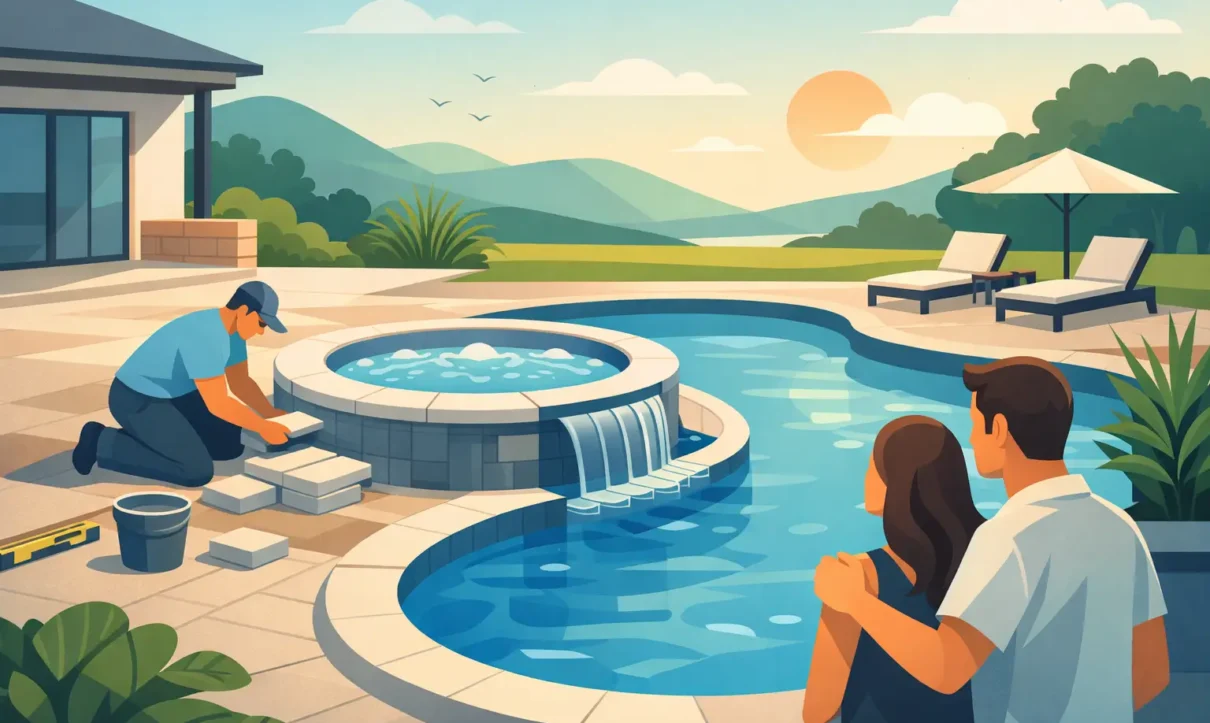
By A pool can be the center of a Las Vegas backyard for most of the year, but adding a spa to an existing pool creates a different kind of value: a place to unwind on cool desert evenings, recover after a workout, or gather with family without needing a full pool day. It is also one of the most technically involved pool upgrades. The best results come from treating the spa as part of a complete backyard design, not as a feature simply attached to the pool shell.
An attached spa can make an older pool feel newly purposeful while bringing water, light, hardscape, and landscaping into a more cohesive outdoor retreat. But whether the addition is straightforward or requires a larger renovation depends on the existing pool’s structure, equipment, access, and the level of finish you want.
Can You Add a Spa to an Existing Pool?
In many cases, yes. A new spa can be built directly against an existing pool, positioned nearby as a connected feature, or designed as a separate raised spa elsewhere in the yard. The right approach depends less on the pool’s age alone than on its condition and construction details.
A professional evaluation starts with the pool shell, surrounding deck, plumbing layout, electrical capacity, and equipment pad. Builders need to know where existing lines run, whether the pool structure can accommodate a new connection, and how excavation can be completed without compromising nearby walls, utilities, or hardscape. In Las Vegas, access can be a major factor as well. A compact side yard may call for careful equipment planning and specialized construction methods.
If the pool is due for replastering, tile replacement, coping work, or equipment upgrades, that timing can be ideal. Combining the work often creates a more unified appearance and avoids installing a beautiful new spa beside finishes that are near the end of their life.
Start With the Spa Experience You Want
The size and shape of a spa matter, but the experience matters more. A simple spillover spa connected to the pool may be ideal for homeowners who want a classic, integrated look. A larger raised spa with a broad spillway can become an architectural focal point viewed from the home, patio, or outdoor kitchen.
Think through how the space will actually be used. A compact spa for two calls for a different footprint than a family-sized spa with multiple therapy seats. Bench depth, jet placement, entry steps, handholds, and the height of the spa wall should be planned around comfort and safe access. This is especially important when homeowners want a raised design that creates visual impact but also needs practical, easy entry.
A few choices shape the final atmosphere: a quiet sheet spillway versus a more dramatic cascade, warm white lighting versus color-changing LEDs, and natural stone versus clean porcelain or glass tile. These selections should relate to the pool and the rest of the backyard rather than compete with them.
Attached, Raised, or Separate?
An attached spa shares water with the pool through a spillway or concealed connection and usually offers the most integrated appearance. It can be built at pool level, though raised spas are common because they create dimension and allow water to flow into the pool.
A separate spa provides more placement flexibility. It may work better when the pool deck is crowded, when the desired view is away from the pool, or when a homeowner wants the spa closer to a covered patio, fire feature, or primary suite. It can still feel like part of the same environment through matching materials, lighting, and landscape design.
There is no universal best option. The most successful layout is the one that supports circulation through the yard, preserves usable patio space, and looks intentional from the home’s primary viewing areas.
The Plumbing and Heating Behind a Great Spa
A spa must heat quickly, circulate water effectively, and deliver comfortable jet action. That requires dedicated plumbing and controls designed for spa operation, not just an extension of the existing pool system.
The existing equipment may have adequate capacity, particularly if it is newer and was sized with future features in mind. More often, adding a spa means evaluating or upgrading the heater, pump, filter, automation controls, and electrical service. A spa typically operates at a much higher temperature than a pool, so heating performance and energy use deserve serious attention early in the design process.
Hydrotherapy jets also require thoughtful engineering. Their number, location, and pump configuration affect how the spa feels in use. More jets are not automatically better. Well-positioned jets that target the back, legs, and shoulders can provide a more enjoyable experience than an overcrowded spa with uneven pressure.
Automation is another worthwhile consideration. With an app-based control system, homeowners can activate the spa, set the temperature, operate lighting, and manage water features before stepping outside. For a spa used frequently during cooler months, that convenience can make the feature far more practical.
Structural Work Is Where Experience Counts
Adding a spa is not a cosmetic deck addition. The project generally involves excavation, steel reinforcement, plumbing installation, shotcrete or structural concrete work, waterproofing, tile, coping, equipment connections, and finish work. If the spa connects to an existing pool, the transition between new and old construction must be carefully detailed.
This is why the existing pool condition matters. Cracks, deteriorated plaster, outdated plumbing, and settlement around the deck do not necessarily prevent a spa addition, but they may change the recommended scope. Addressing underlying issues during construction protects the investment and produces a more polished result.
Permitting and code compliance are part of the process as well. Requirements can involve electrical bonding, barriers, drainage, setbacks, gas connections, and safety provisions. A licensed, bonded, and insured contractor should coordinate these details rather than leave homeowners to sort through separate trades and approvals.
Designing the Spa Into the Whole Backyard
The strongest spa additions improve more than the water. They can reorganize the way a backyard functions.
For example, a raised spa may define the edge of a new lounge area while serving as a visual backdrop for a fire feature. New decking can create a safer, more generous path from the house to the water. A patio cover, outdoor kitchen, or landscape lighting plan can turn a spa project into a complete entertainment setting. Even a modest spa addition benefits from considering sightlines, shade, seating, and how people move through the space after dark.
Professional 3D design is especially valuable here. Before construction begins, homeowners can see how spa elevation, spillways, tile, deck materials, and adjacent features will work together. That visual certainty helps avoid a common problem with piecemeal upgrades: each feature may look good independently, yet the finished yard lacks a clear design language.
Laguna Pool and Spa brings more than 30 years of Las Vegas Valley construction experience to these decisions, helping homeowners connect technical requirements with a backyard plan that feels personal and complete.
Budget Factors to Discuss Early
The cost of a spa addition varies widely because the feature itself is only one part of the work. A simple connected spa with accessible equipment and minimal deck replacement is very different from a raised custom spa paired with new tile, a spillway wall, upgraded automation, and a full backyard renovation.
The primary cost drivers are spa size and shape, structural complexity, demolition and access, plumbing distance, equipment upgrades, finishes, and the amount of deck or landscape work needed to integrate the addition. Premium materials and intricate water features can elevate the design, while a clean, smaller footprint may deliver excellent daily enjoyment with a more focused investment.
The key is to establish priorities before selecting finishes. If fast heating and reliable automation are essential, it may make sense to direct more of the budget toward equipment and controls. If the goal is a dramatic visual centerpiece, the spa wall, spillway, tile, and surrounding hardscape may deserve greater emphasis. A detailed design consultation helps clarify those trade-offs before construction is underway.
Plan for Long-Term Enjoyment
A well-built spa needs regular attention just like a pool, including balanced water chemistry, filter cleaning, and periodic equipment service. Because spa water runs warmer and has less volume than pool water, it can change chemistry more quickly. Good circulation, appropriately sized equipment, and easy-to-use controls make ownership simpler.
Material selection also affects long-term maintenance. Tile at the waterline, durable coping, and thoughtfully placed drainage can reduce avoidable wear. If the existing pool is being resurfaced at the same time, choosing a finish and tile palette that complement the spa creates continuity that will still look considered years from now.
The most rewarding spa additions are designed around real evenings at home: the path from the back door, the view from a favorite chair, the lighting after sunset, and the comfort of warm water when the desert air turns crisp. Begin there, then let skilled design and construction turn that routine into a backyard retreat worth using all year.





4 Comments
Comments are closed.