 By
A pool’s edge gets more use than almost any other surface in the backyard. It is where swimmers hold on, where guests sit with their feet in the water, and where splashing water meets the surrounding deck. So, what are pool coping options? Pool coping is the protective, finished cap installed around a pool’s perimeter. It frames the waterline, helps direct water away from the shell, and gives the pool a comfortable, intentional edge.
For Las Vegas homeowners, coping is not simply a finishing detail. Desert heat, intense sunlight, hard water, and the way you plan to use your outdoor space should all influence the material and profile you choose. The right coping connects the pool, spa, patio, and landscape into one cohesive outdoor retreat.
What Are Pool Coping Options and Why Do They Matter?
Coping sits at the top edge of the pool wall, typically between the interior waterline tile and the deck. In a concrete pool, it is a critical transition piece that protects the pool structure while creating a finished border. It can be poured in place as part of the deck, installed as individual pieces of stone or precast concrete, or designed with pavers and specialty materials.
Function matters as much as appearance. Properly designed coping should provide a smooth handhold, manage water runoff, and limit the amount of pool water that reaches the deck. Its profile can also affect comfort. A rounded edge feels softer for swimmers, while a squared or eased edge creates a more contemporary architectural look.
Coping and decking are often selected together, but they do not have to match exactly. A light travertine coping can frame a contrasting porcelain paver deck, for example. The goal is visual continuity without making the entire backyard feel flat or overmatched.
Popular Pool Coping Materials
Poured-in-Place Concrete
Poured concrete coping is formed and finished on site, often as part of a cantilevered concrete deck. Instead of a separate capstone, the deck material extends over the pool edge in a clean, continuous line.
This option works especially well for modern pools, geometric designs, and homeowners who want a streamlined appearance. Concrete can be colored, textured, or finished to coordinate with the patio. It is also flexible enough to follow freeform pool curves.
The trade-off is that concrete can become hot in direct Las Vegas sun, depending on its color and finish. It also needs properly placed control joints and expert installation to reduce the visual impact of normal concrete movement or cracking over time. A lighter color and heat-conscious finish can make a significant difference in barefoot comfort.
Precast Concrete Coping
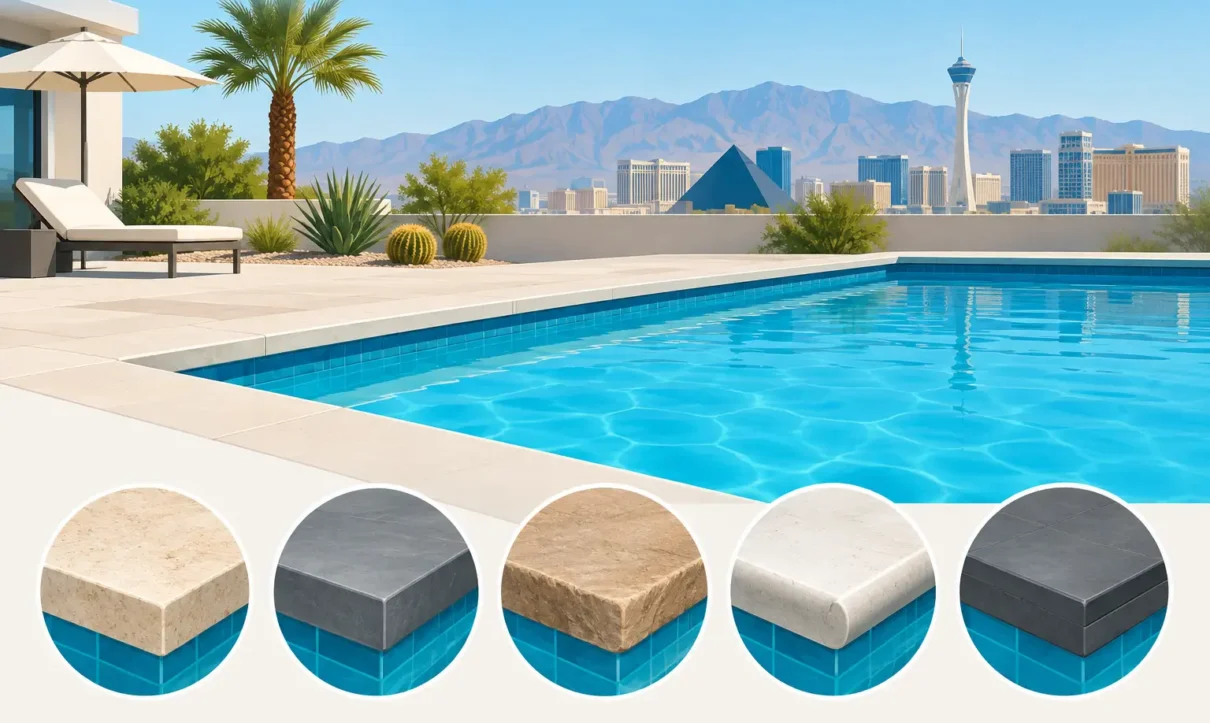
Precast coping is manufactured in consistent sections and installed around the pool perimeter. It is available in a range of shapes, including bullnose, square-edge, and more decorative profiles.
For homeowners who want a traditional pool edge with a defined border, precast concrete is a dependable choice. It provides a uniform look, is generally more budget-conscious than premium natural stone, and can complement many deck materials. A bullnose profile remains popular because its rounded front edge is comfortable for swimmers and visually softens the transition into the water.
Precast coping has visible joints between sections, which may be a design advantage or drawback depending on the look you want. Those joints need appropriate maintenance as part of long-term pool care.
Natural Stone Coping
Natural stone brings depth, color variation, and a high-end custom character that manufactured materials cannot fully duplicate. Common choices include limestone, sandstone, quartzite, and flagstone, each with its own texture, density, and color range.
Stone coping can suit both contemporary and resort-inspired landscapes. Honed limestone may support a clean, refined poolscape, while more textured stone can complement a desert landscape, natural boulders, and freeform water features.
Not every stone is right for every Las Vegas pool. Some porous stones can absorb water, show mineral deposits, or require more regular sealing. Others may be too rough for a comfortable handhold or too uneven for a crisp modern design. Material selection should account for the pool’s water chemistry, exposure to sun, and whether the coping will also be used as a frequent seating edge.
Travertine Coping
Travertine remains a favorite around Las Vegas pools because it offers a classic resort look and tends to stay more comfortable underfoot than many darker, denser materials. Its natural variation works beautifully with patios, raised spas, outdoor kitchens, and fire features.
Travertine coping is available in bullnose, drop-face, and square-edge styles. A drop-face piece creates a thicker, more substantial pool border, while a bullnose edge feels familiar and welcoming. Filled and honed travertine offers a more polished appearance; tumbled finishes provide a softer, more relaxed character.
Like all natural materials, travertine requires thoughtful installation and maintenance. Quality stone, proper setting materials, and suitable sealing are essential. Homeowners should also understand that natural variation is part of the appeal. No two pieces will look identical.
Porcelain and Paver Coping
Porcelain coping and matching porcelain pavers are increasingly common in refined outdoor living designs. They offer consistent color, low porosity, and a broad selection of looks, from warm stone-inspired tones to large-format contemporary finishes.
This option is a strong fit when a homeowner wants the pool edge and patio to read as one coordinated surface. Porcelain can be especially practical around pools because it resists staining and is relatively easy to maintain. The finish still matters: choose a product rated for exterior, wet-area use with appropriate slip resistance.
Concrete pavers can also be used as coping when the system is designed specifically for a pool edge. Pavers offer design flexibility and can make future surface repairs more manageable than a monolithic deck. However, the coping pieces must be securely installed and detailed correctly to prevent shifting and maintain a clean edge.
Brick and Tile Accents
Brick coping can bring a timeless character to traditional homes, courtyards, and classic backyard designs. It is durable and visually warm, although it is less common in sleek contemporary pool projects. Color selection is important in the desert, since darker brick can retain considerable heat.
Tile is usually used below the coping at the waterline rather than as the primary coping material. Still, specialty tile can create striking accent edges on raised spas, vanishing-edge walls, and water features. It is best used where the design calls for detail and visual impact, not where a thick, comfortable handhold is needed around the entire pool.
Choosing the Right Coping Profile
Material is only half the decision. The coping profile determines how the edge looks and feels. Bullnose coping has a rounded front edge that suits classic pools and family-friendly designs. Eased-edge or square-edge coping creates sharp, clean lines for modern architecture. Drop-face coping extends down the outside pool wall for a bold, substantial border.
A raised spa may use a different profile than the main pool to highlight the elevation change. Infinity edges, beach entries, wet decks, and perimeter-overflow details also require specialized coping and waterproofing approaches. These features should be designed early, not added as an afterthought once deck materials have been selected.
Las Vegas Factors That Should Shape Your Selection
The best pool coping option depends on how your backyard performs during the hottest months, not just how a sample looks indoors. Light colors generally feel cooler underfoot and reflect more sunlight. Textured finishes can improve traction, but overly rough surfaces may be uncomfortable for bare feet or difficult to clean.
Drainage is another priority. Coping and deck elevations should move water away from the pool and home while accommodating the yard’s overall grading. This is particularly important around outdoor kitchens, covered patios, and landscaping where water should not collect near structures or walkways.
Water chemistry also deserves attention. Properly balanced pool water helps protect coping, tile, grout, and nearby finishes. Saltwater pools can be compatible with many coping materials, but they require careful product selection and installation details, particularly for porous stone and certain metal components.
Finally, consider the whole view. Coping may cover a relatively narrow band around the water, yet it is visible from nearly every seat in the backyard. It should relate to the home’s exterior, the deck, the waterline tile, and the style of the pool itself.
Design the Edge Before Construction Begins
The most successful pool coping is chosen as part of a complete outdoor design, alongside the pool shape, tile, deck, spa, landscaping, and gathering areas. Seeing those materials together in a professional plan or 3D model can prevent a costly decision based on a small sample alone.
At Laguna Pool and Spa, more than 30 years of Las Vegas Valley construction experience informs each detail, from a heat-conscious deck surface to a coping profile that complements a custom spa or water feature. Bring photos, material ideas, and the way you want to use your backyard to a design consultation. The right pool edge can make the entire retreat feel finished, comfortable, and built for years of everyday enjoyment.